Gallery
The 63 works by 38 artists reproduced in the essay and its annexes, from the oldest to the most recent: for each, a thumbnail, its enlargement on hover, and the link to the place where it appears.
6th century BCE
Exekias6th century BCE
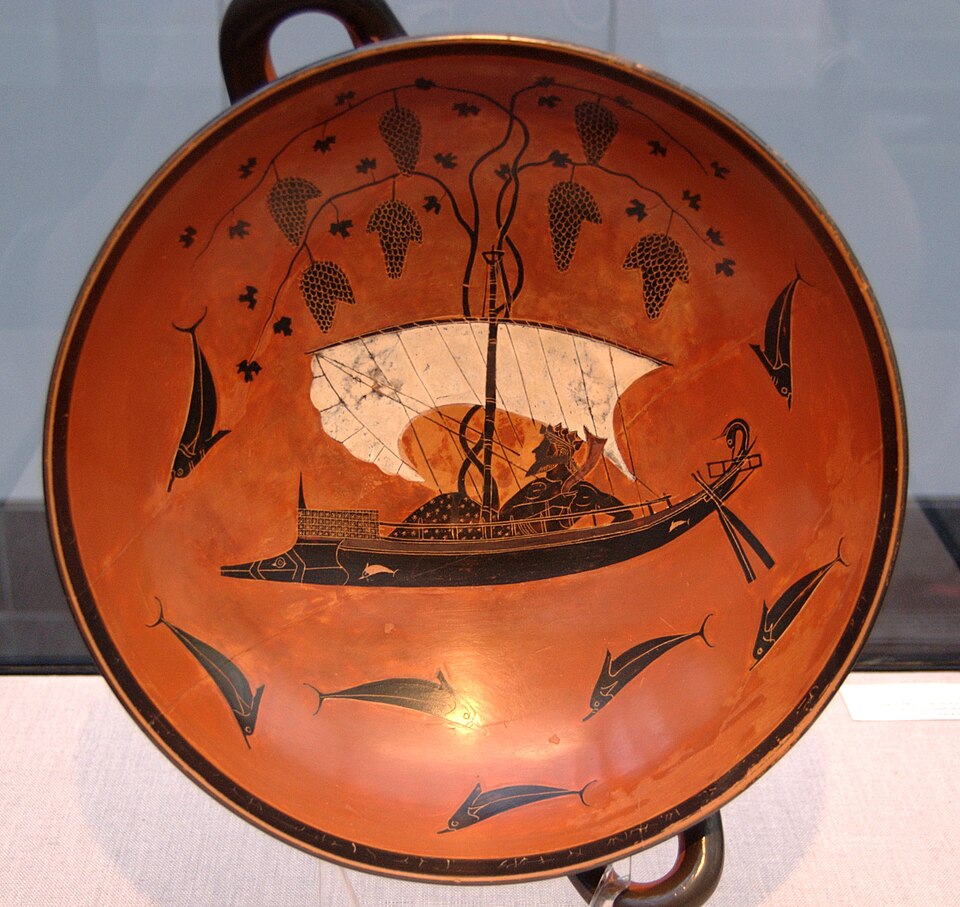 Dionysus in His Ship, Attic black-figure cup (c. 530 BCE, Munich, Staatliche Antikensammlungen): the pirates who had captured the god are turned into dolphins Annexe: Dionysus and the Bacchae: the foreign god, madness, dismemberment
13th century
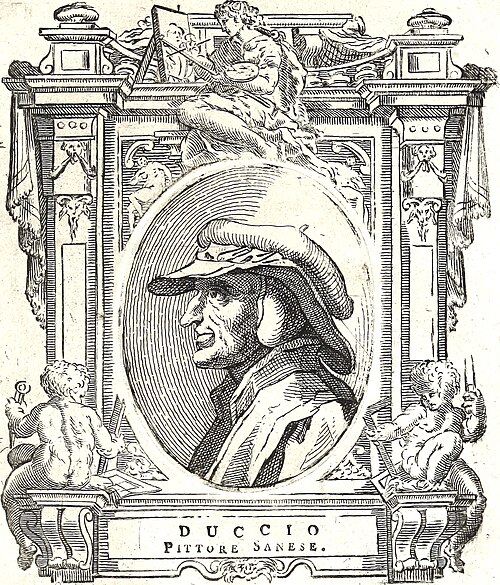 Duccio di Buoninsegna1255-1319
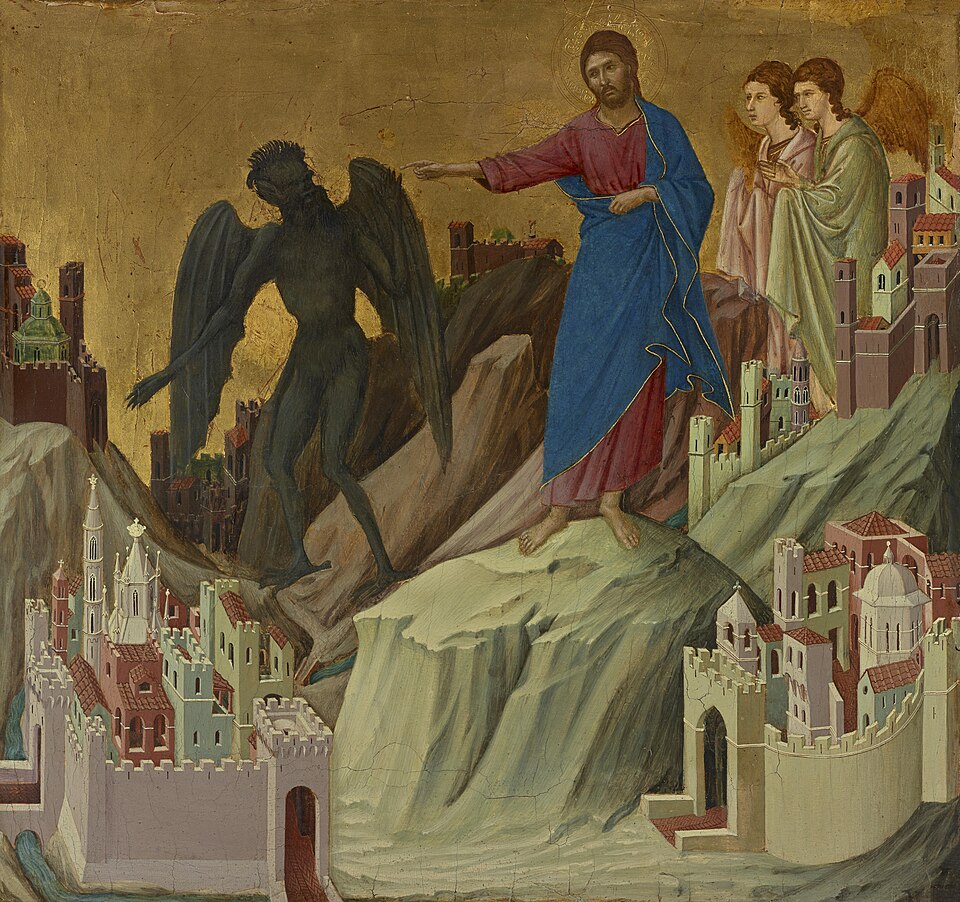 The Temptation of Christ on the Mountain (1308-1311, New York, Frick Collection), a panel from the Siena Maestà: the temptations that the Grand Inquisitor takes up Dostoevsky · Read the section · Annexe: Matthew and Luke: the infancy, the Sermon on the Mount, the parables
15th century
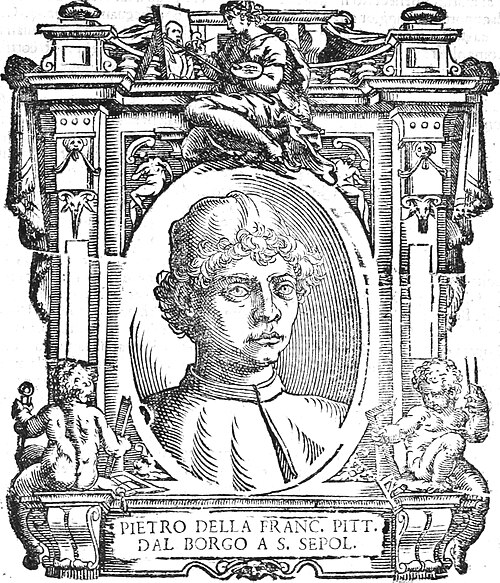 Piero della Francesca1415-1492
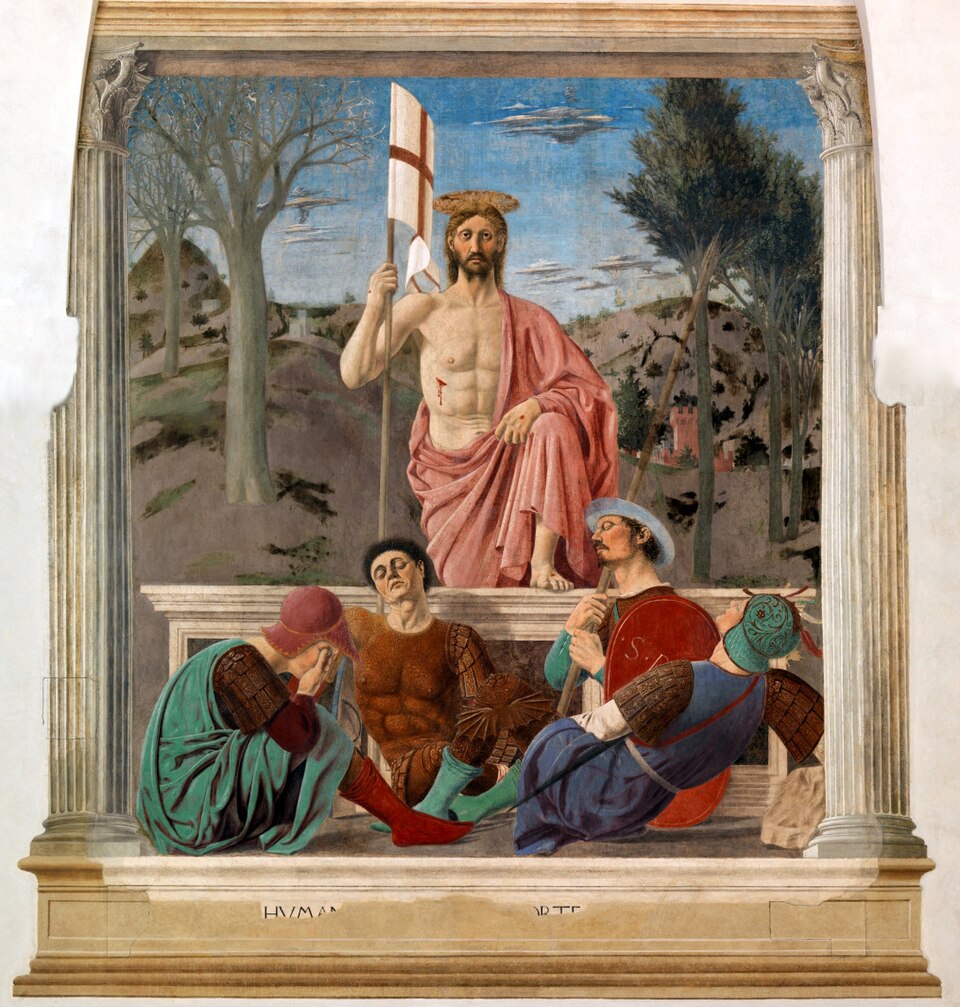 The Resurrection (c. 1463-1465, Sansepolcro, Museo Civico): the Christ of Easter faith, whom historical research distinguishes from the Jesus of history Did Jesus exist? The Jesus of history and the mythicist thesis · Read the section · Annexe: The Passion and the Resurrection: the four accounts and what history retains
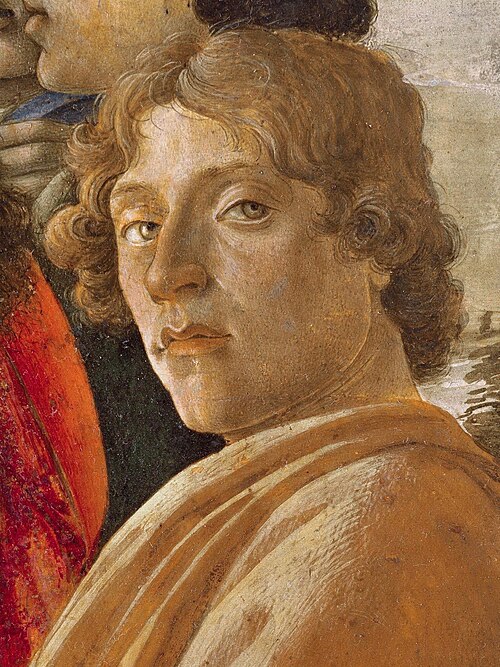 Sandro Botticelli1445-1510
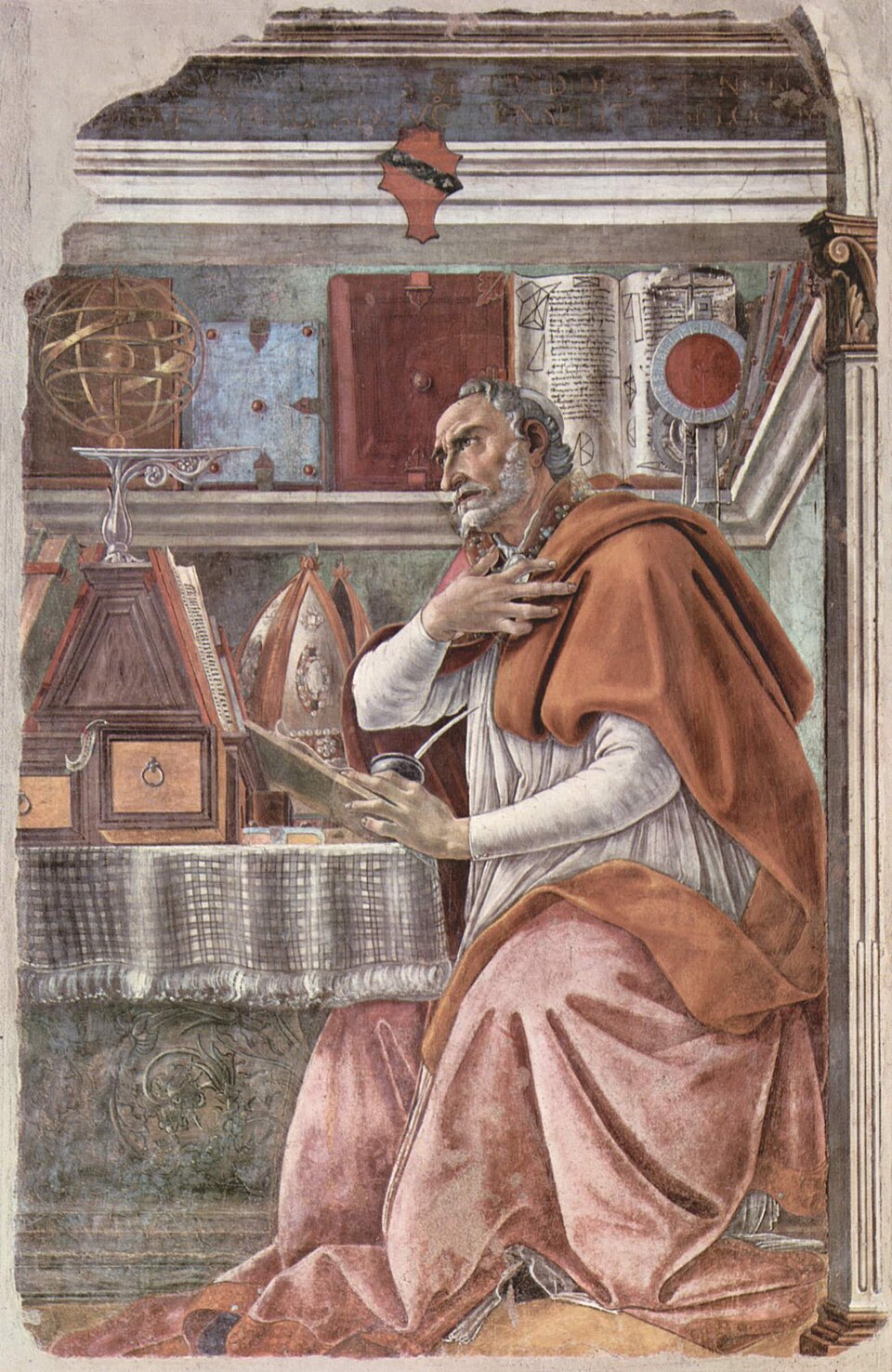 Saint Augustine in His Study (1480, Florence, church of Ognissanti), a fresco painted as a companion piece to Ghirlandaio's Saint Jerome Porphyry and Augustine: the last adversary and the first synthesizer · Read the section
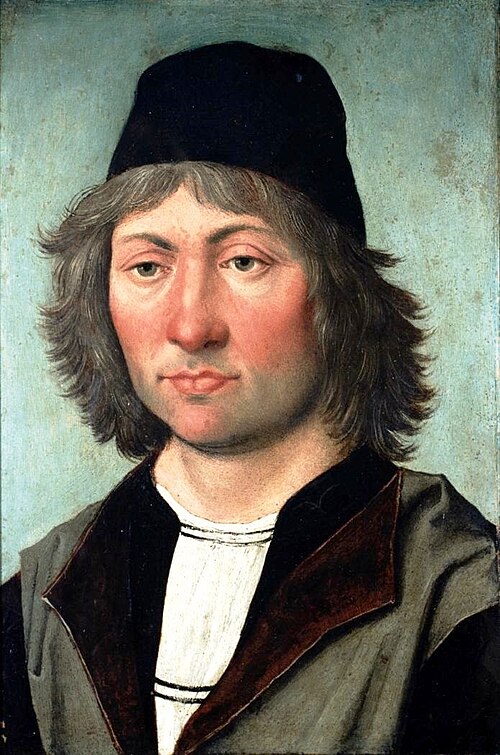 Pedro Berruguete1450-1504
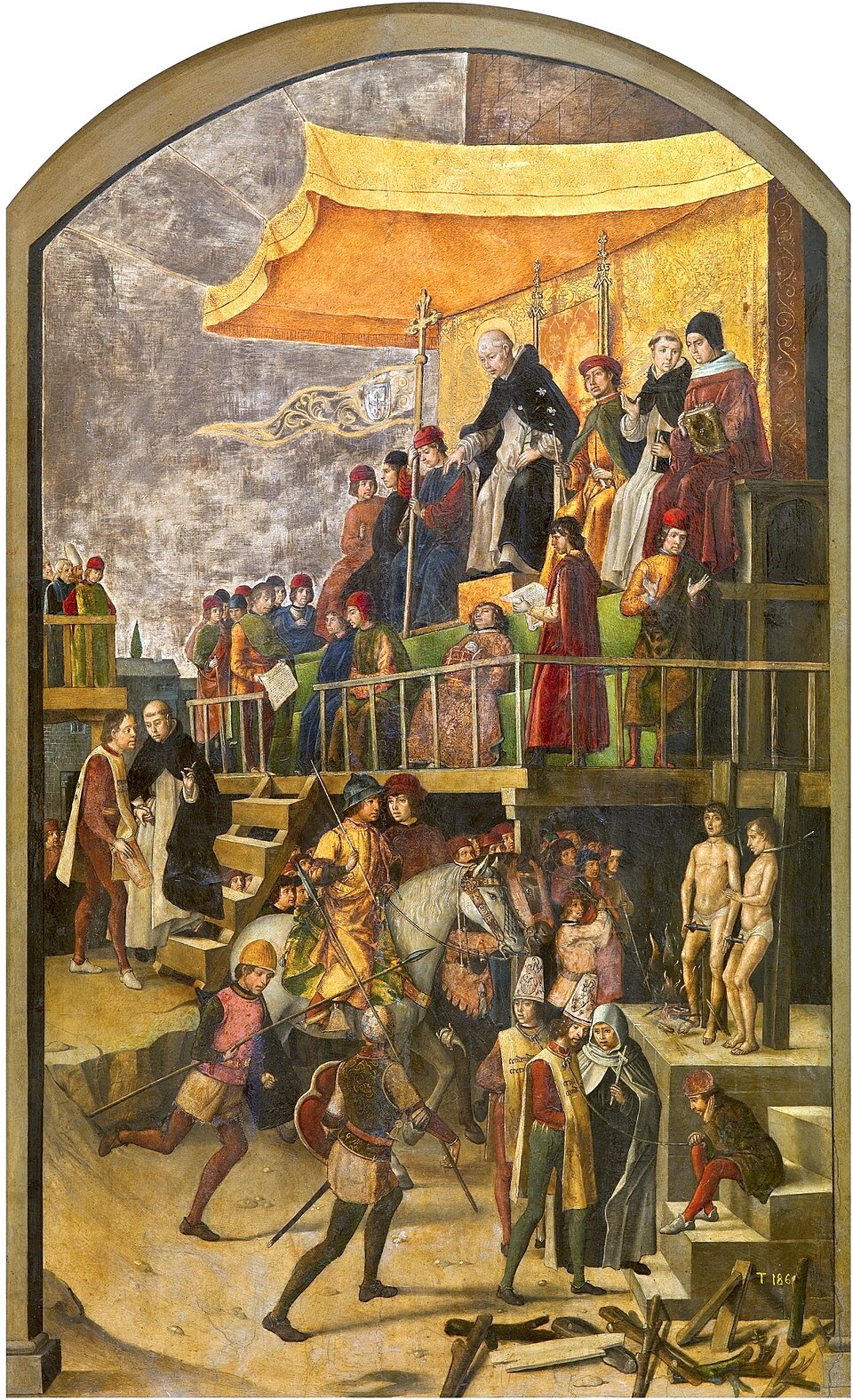 Saint Dominic Presiding over an Auto-da-fé (c. 1493-1499, Madrid, Prado): the Inquisition, which the Grand Inquisitor transports to Seville Dostoevsky · Read the section
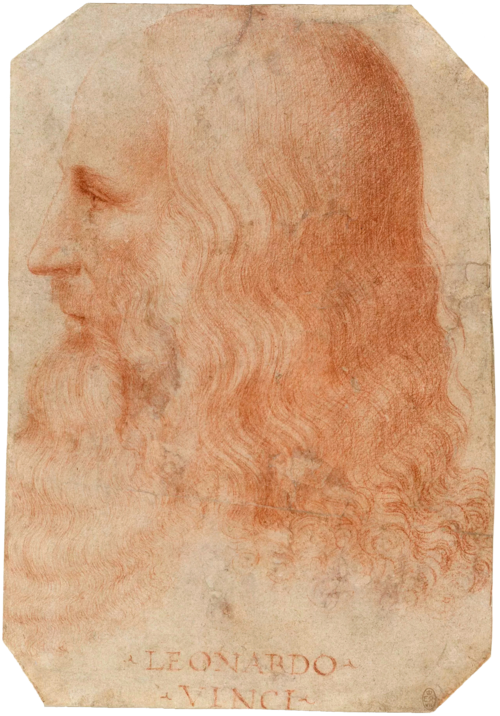 Leonardo da Vinci1452-1519
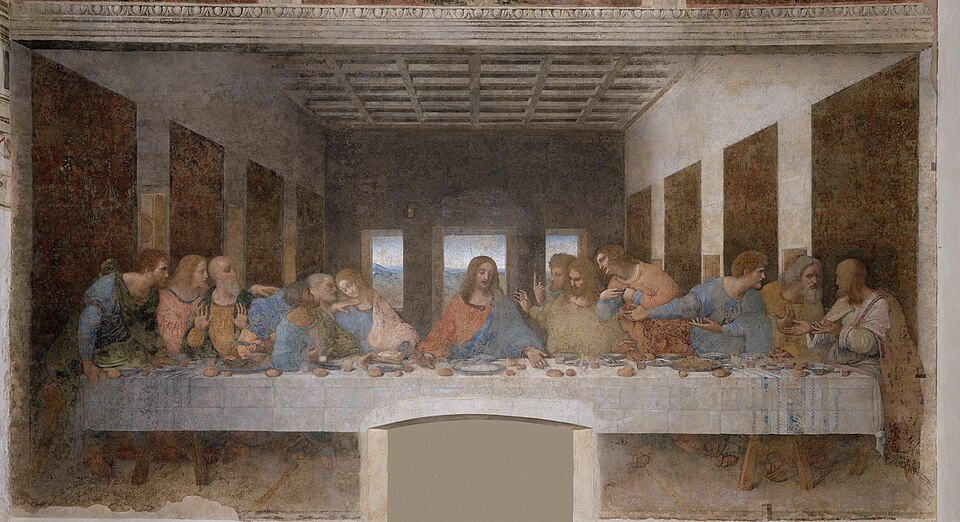 The Last Supper (1495-1498, Milan, refectory of Santa Maria delle Grazie): the bread and the wine, which the last pages of Das Wesen des Christenthums restore to their natural and human meaning Ludwig Feuerbach · Read the section · Annexe: The Passion and the Resurrection: the four accounts and what history retains
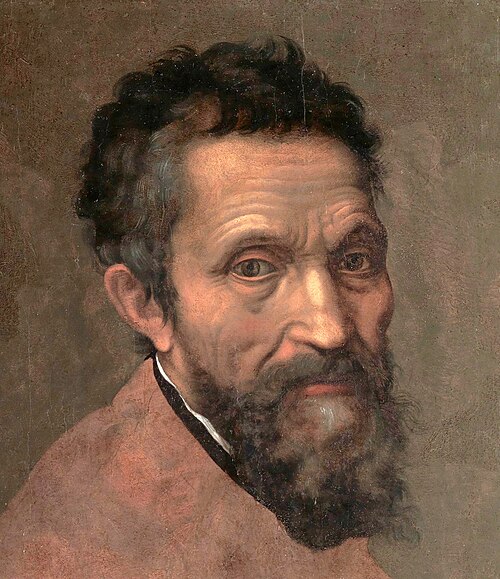 Michelangelo1475-1564
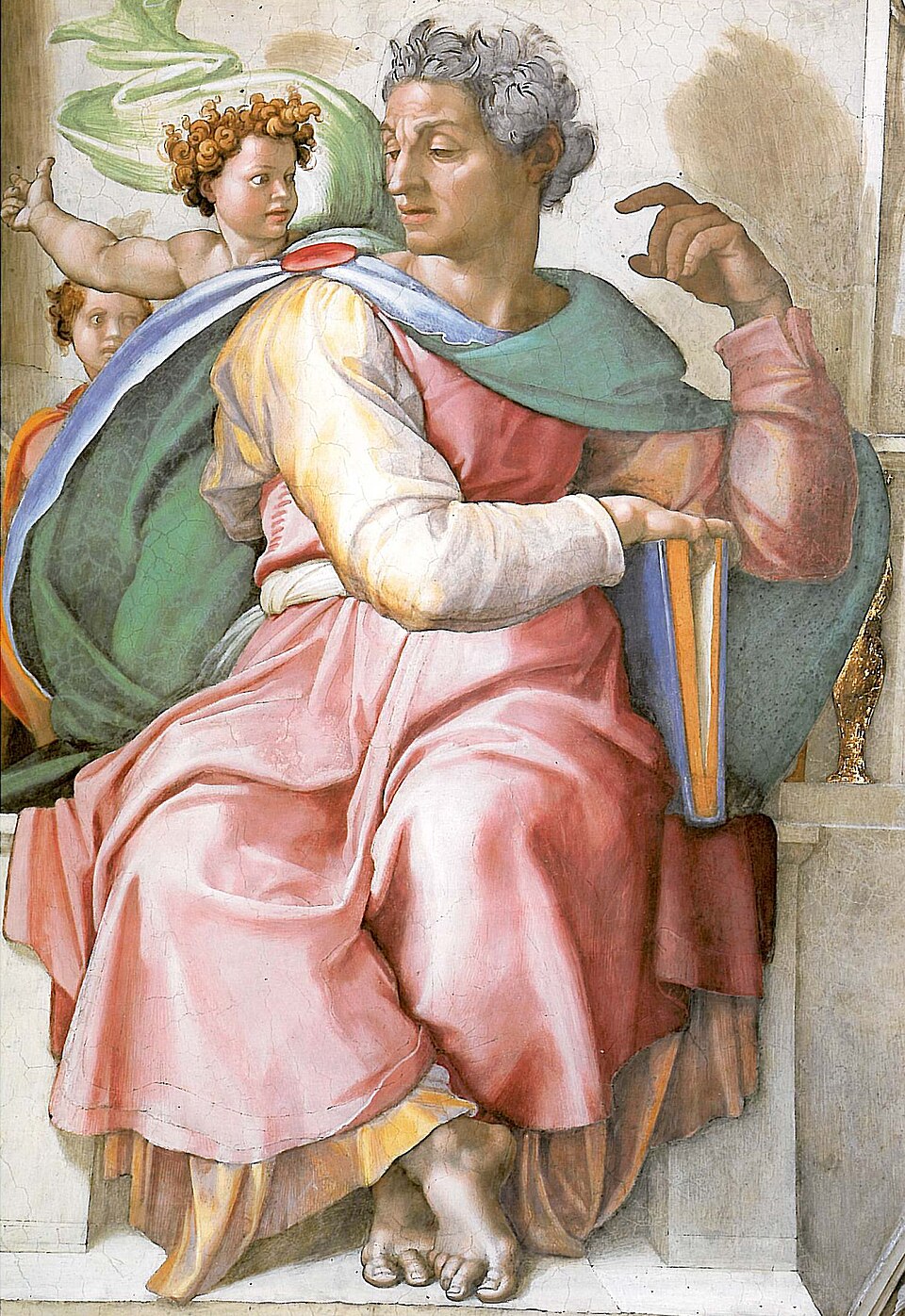 the prophet Isaiah, Sistine Chapel ceiling (1508-1512): Isaiah is the prophet of the hidden God, Deus absconditus (Is 45, 15), at the heart of the Pensées Pascal · Read the section · Annexe: The prophets of Israel, the exile and the book of Daniel
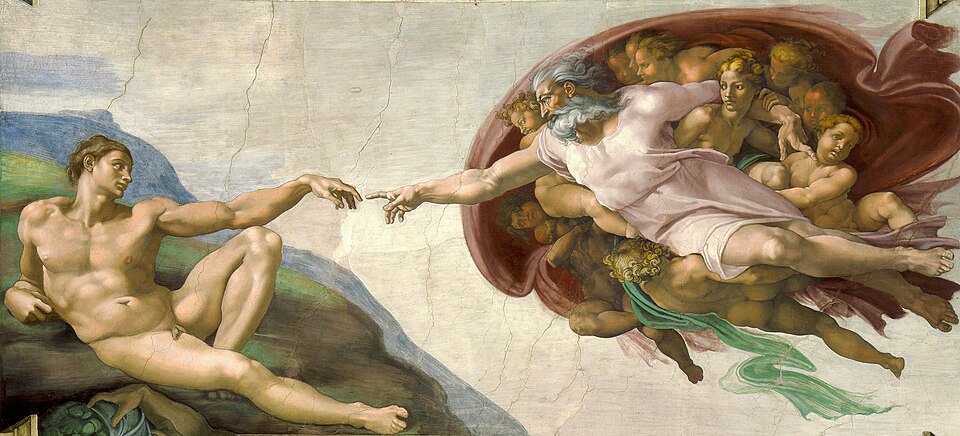 The Creation of Adam, Sistine Chapel ceiling (c. 1511): man created in the image of God (Gn 1, 27), which Habermas seeks to translate into the secular language of dignity Jürgen Habermas · Read the section · Annexe: Genesis 1 to 3: the creation, Adam and Eve, the fall
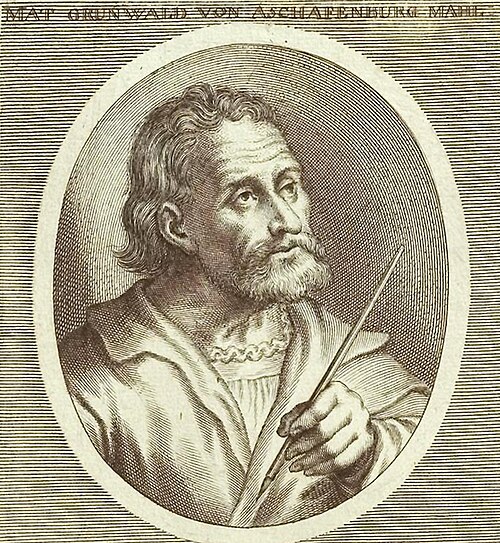 Matthias Grünewald1480-1528
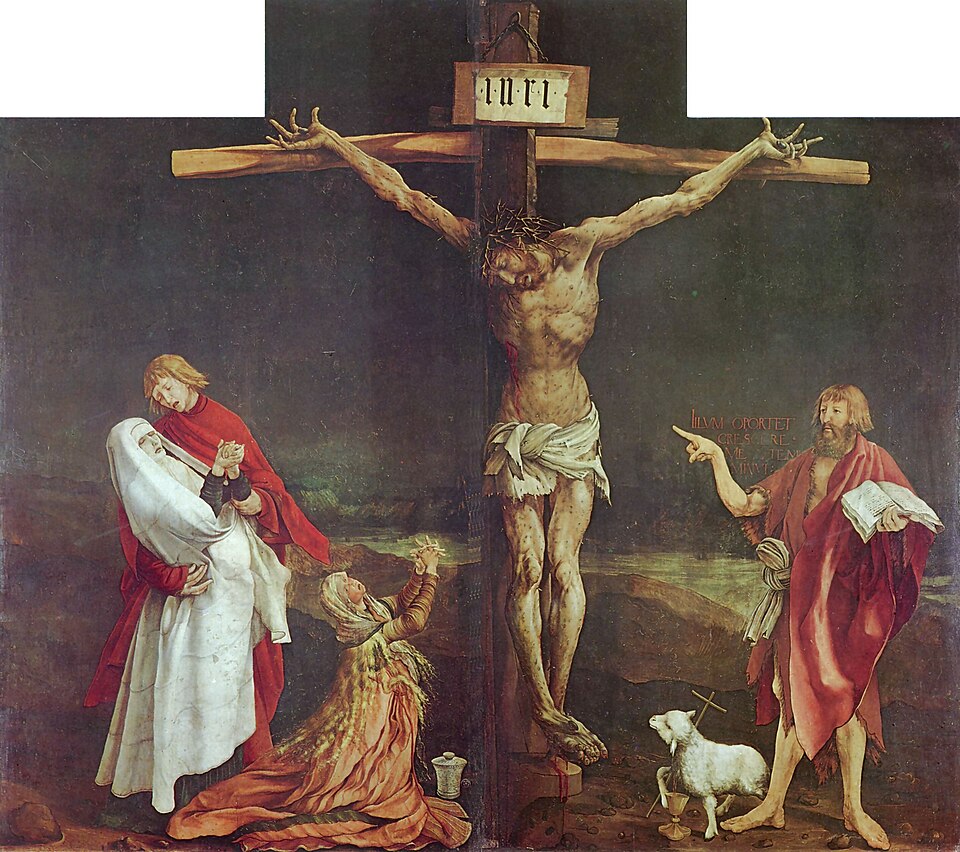 the Crucifixion from the Isenheim Altarpiece (1512-1516, Colmar, Musée Unterlinden): Karl Barth kept a reproduction of this panel above his desk, and the outstretched index finger of John the Baptist served him as a figure of witness Part Ten · See the part · Annexe: The Passion and the Resurrection: the four accounts and what history retains
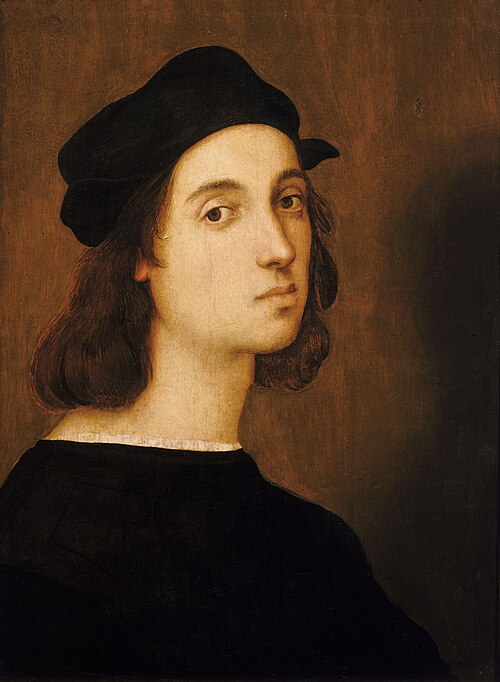 Raphael1483-1520
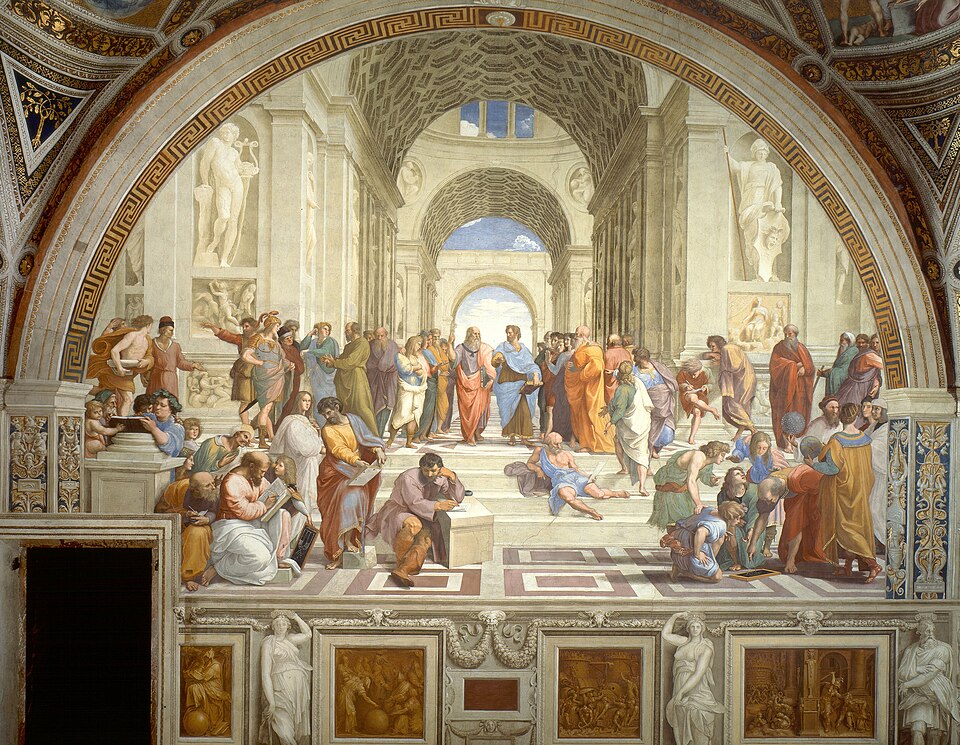 The School of Athens (1509-1511, Vatican, Stanza della Segnatura): in the centre, Plato pointing to the sky and Aristotle stretching his hand towards the earth; on the left, the turbaned figure traditionally identified as Averroes Part One · See the part · Annexe: The philosophers against the myths: from Xenophanes to allegory
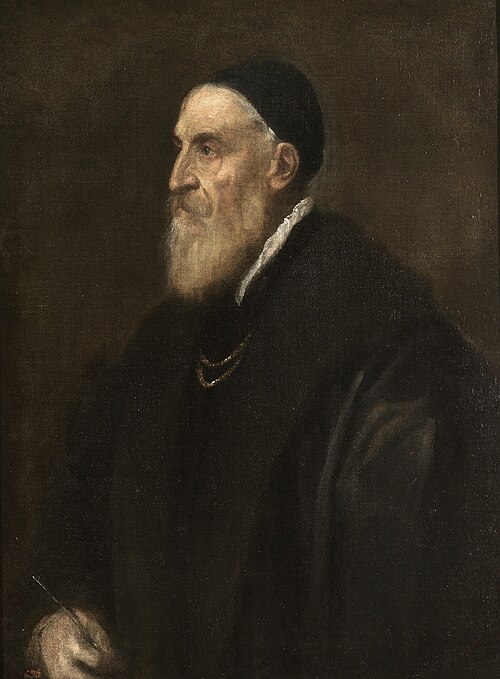 Titian1490-1576
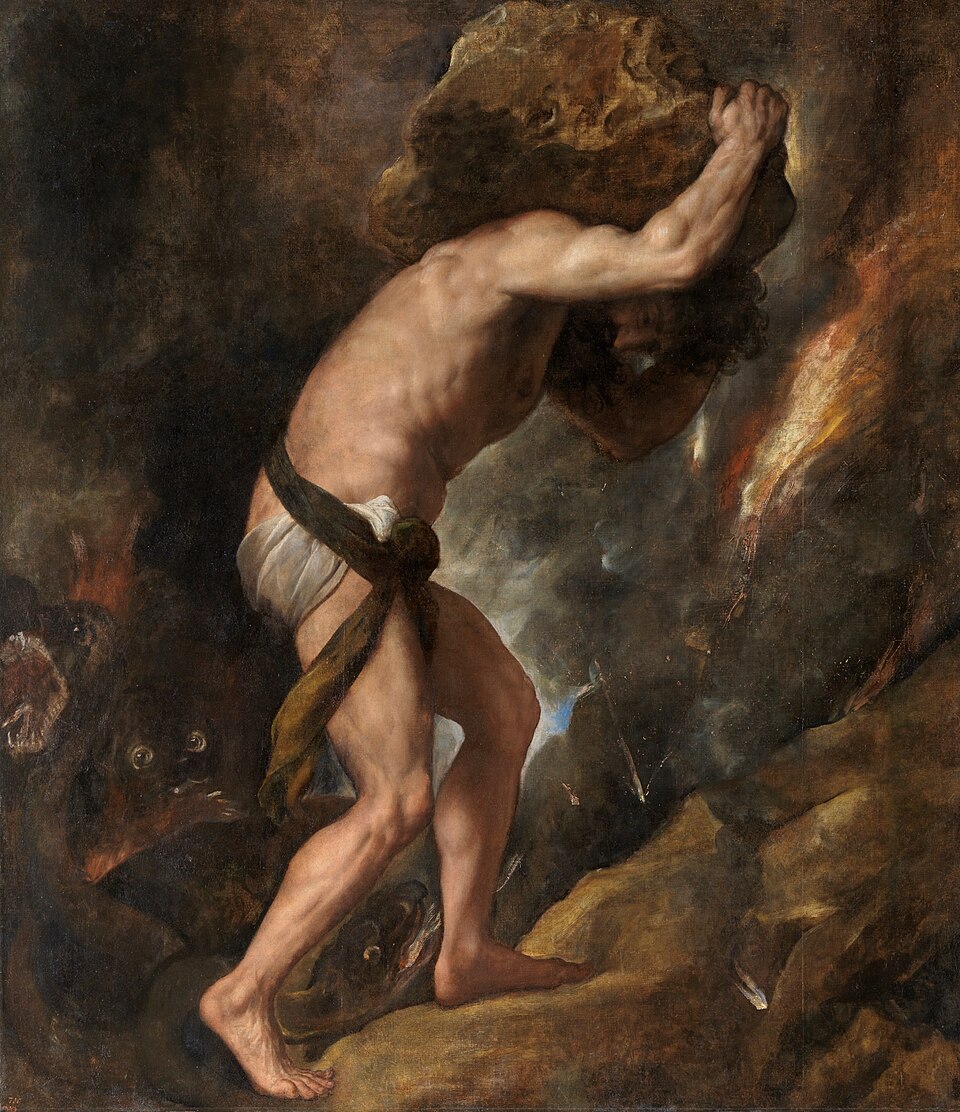 Sisyphus (1548-1549, Madrid, Prado): the figure whom Camus makes the hero of the absurd Camus · Read the section · Annexe: Sisyphus and the underworld: Hades, Tantalus, the Danaids
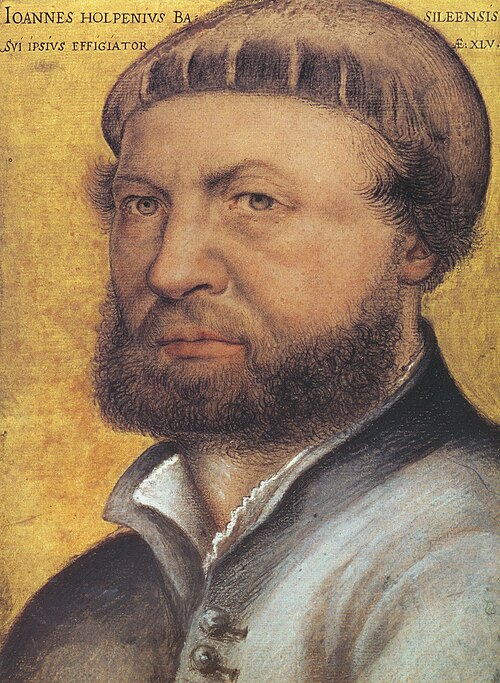 Hans Holbein the Younger1497-1543
 The Body of the Dead Christ in the Tomb (1521-1522, Basel, Kunstmuseum): before a copy of this painting in Rogozhin's house, Prince Myshkin says, in The Idiot (1868-1869), that it could make one lose one's faith Dostoevsky · Read the section · Annexe: The Passion and the Resurrection: the four accounts and what history retains
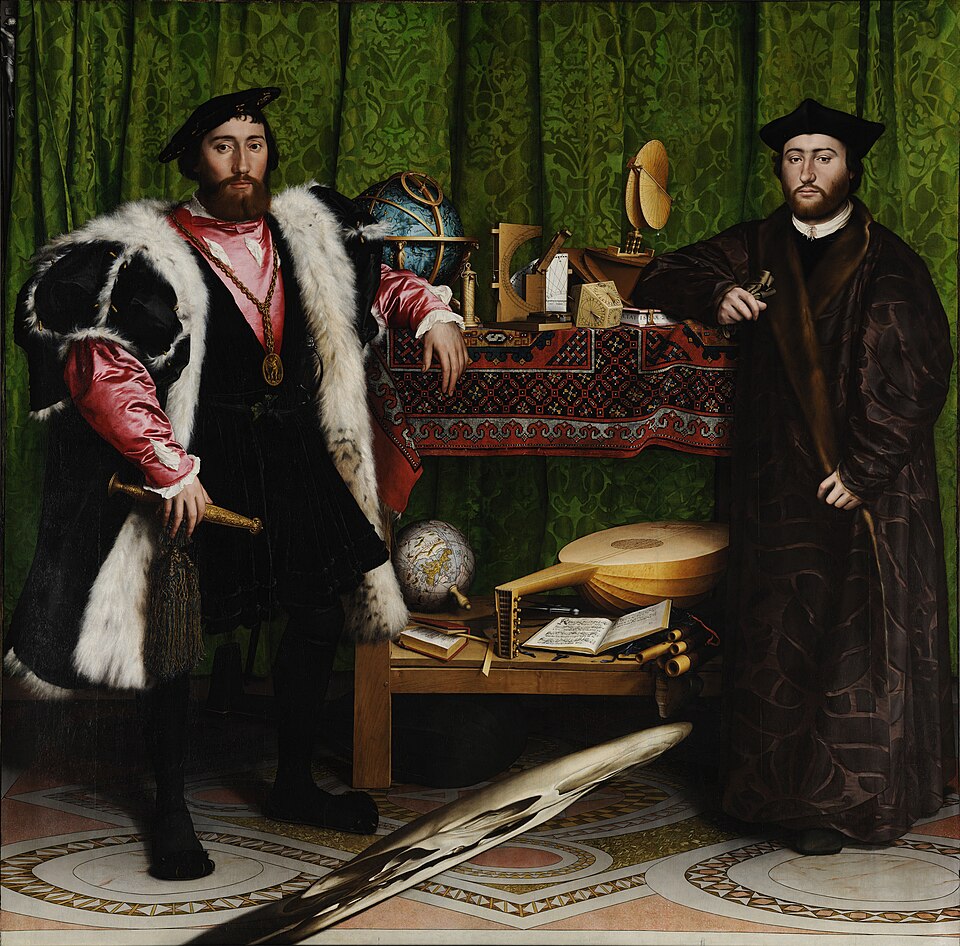 The Ambassadors (1533, London, National Gallery): in the foreground, an anamorphic skull, legible only from an angle, amid the emblems of knowledge and power: death kept out of sight, which Becker places at the centre of The Denial of Death (1973) Becker · Read the section
16th century
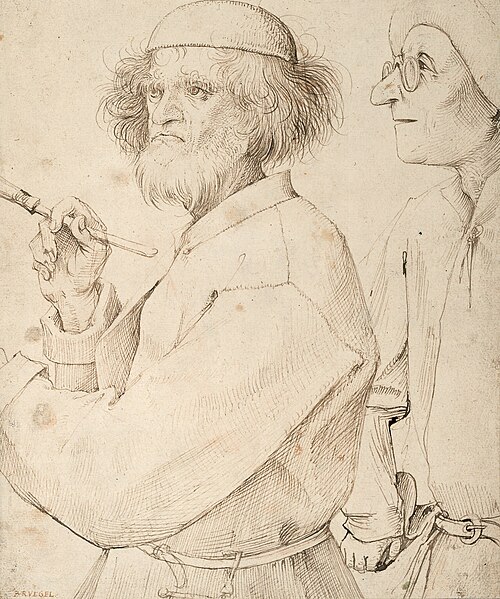 Pieter Bruegel the Elder1525-1569
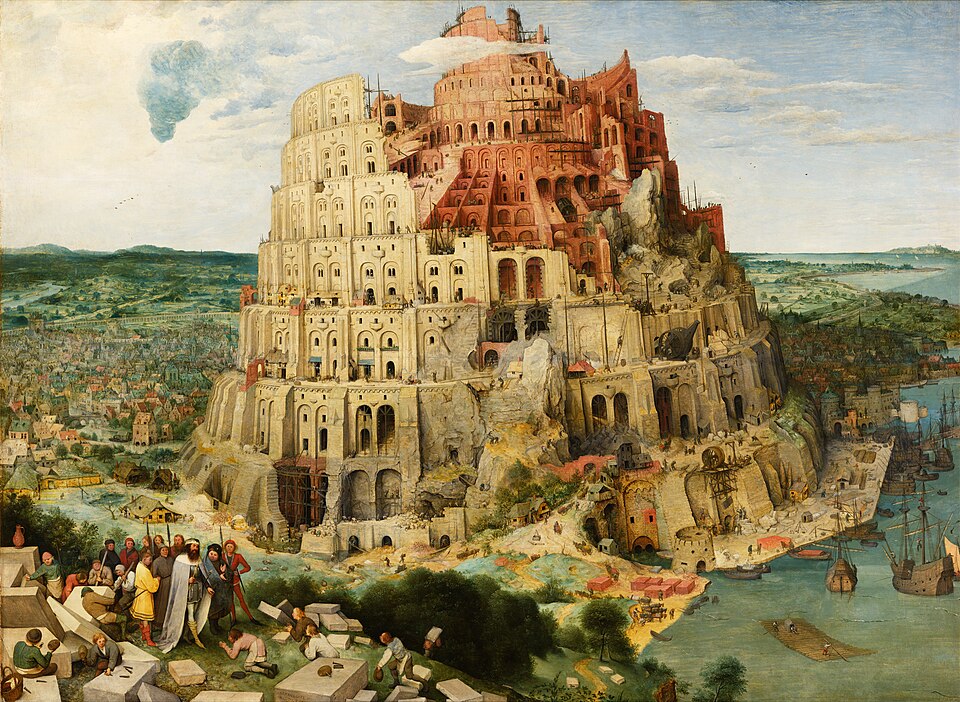 The Tower of Babel (1563, Vienna, Kunsthistorisches Museum): the human work that claims to reach heaven, a figure of what Voegelin calls the immanentization of the eschaton, salvation carried from heaven into history and entrusted to human hands Voegelin and Aron · Read the section · Annexe: From Cain to Babel: the fratricide, the Flood, the tower
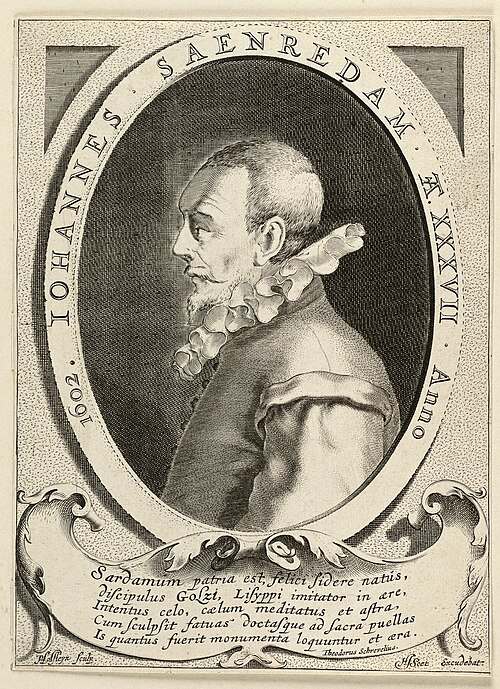 Jan Saenredam1565-1607
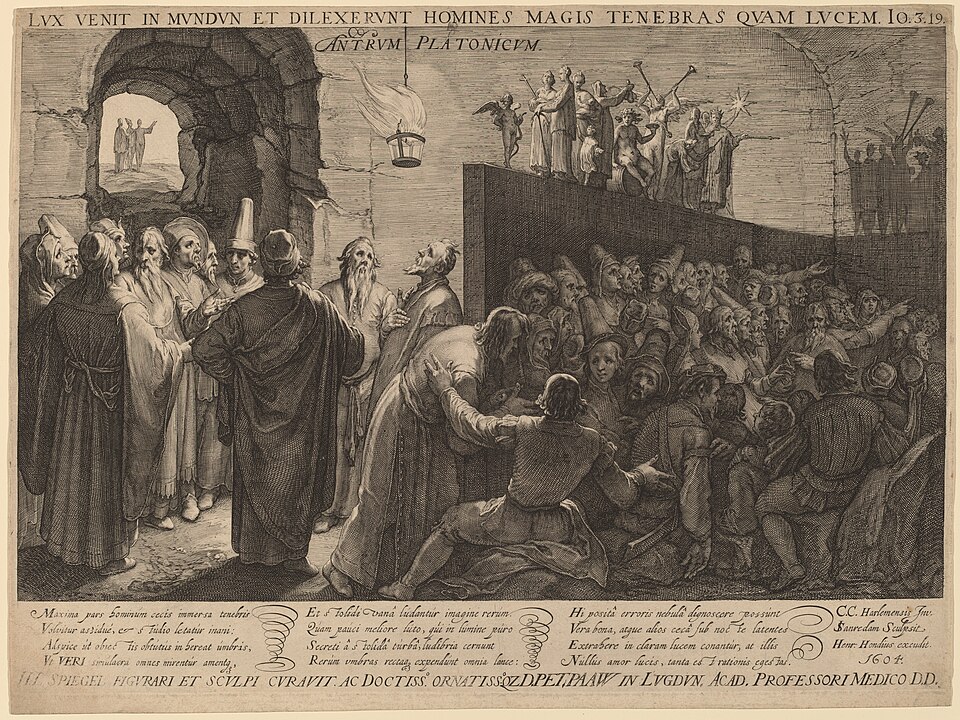 Jan Saenredam after Cornelis van Haarlem, Plato's Cave (engraving, 1604, Washington, National Gallery of Art): the prisoners of the cave (Republic, Book VII); Murdoch makes this myth the pattern of the moral life, a conversion of attention that turns away from the self towards the Good Iris Murdoch · Read the section · Annexe: Plato's myths: Er, Gyges, the noble lie, the androgyne
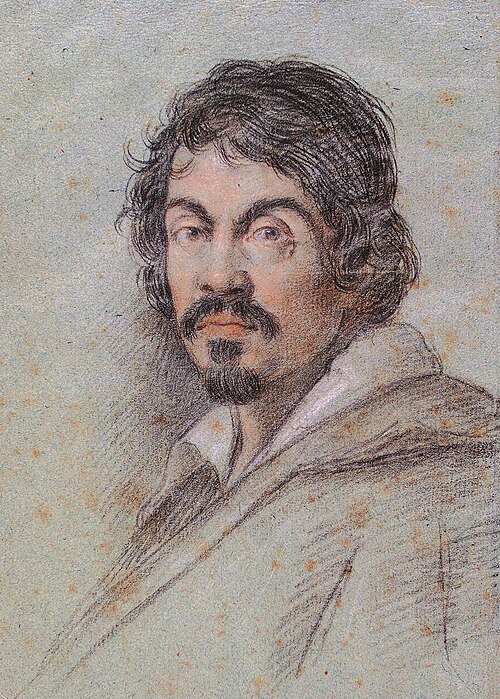 Caravaggio1571-1610
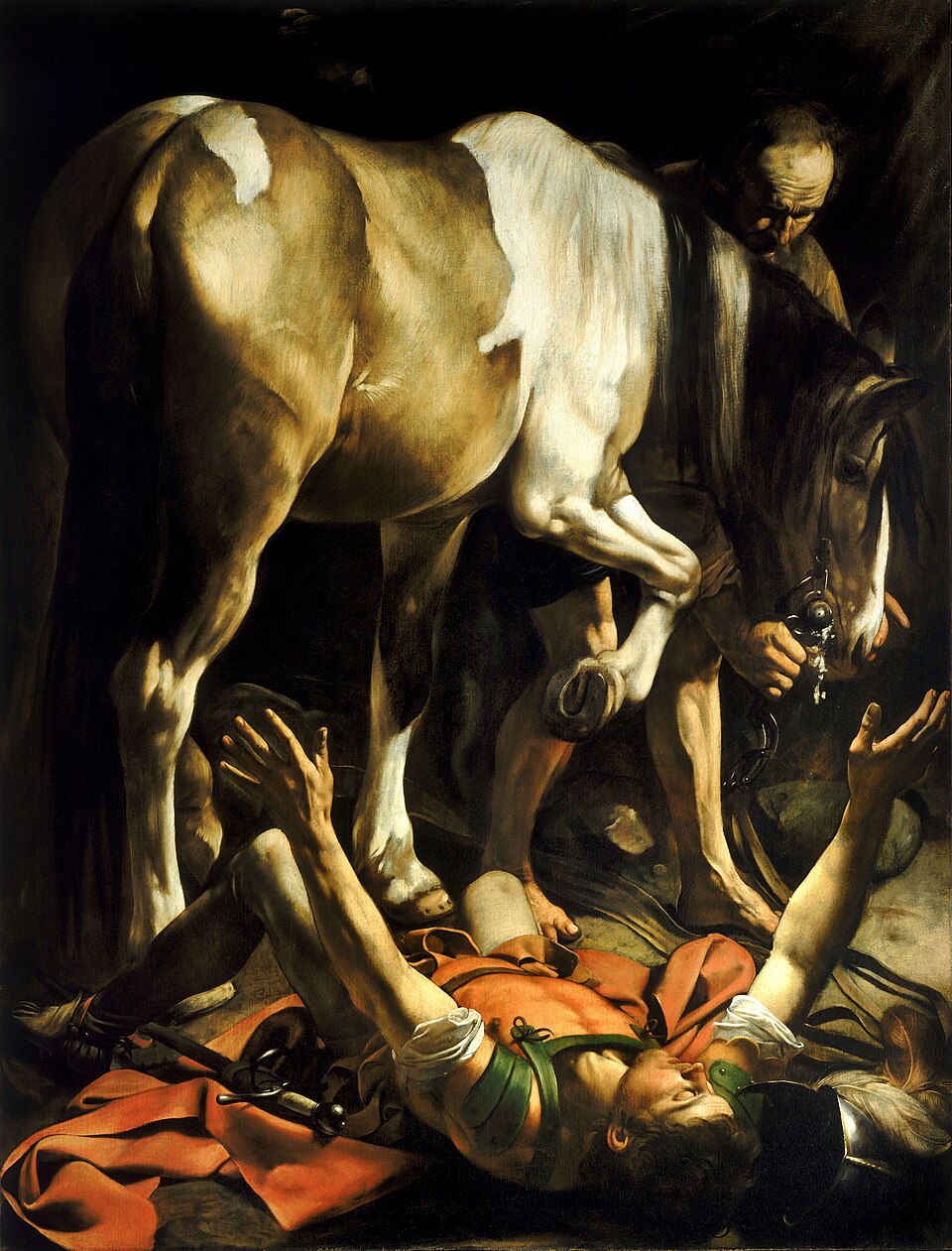 The Conversion of Saint Paul (1600-1601, Rome, Santa Maria del Popolo, Cerasi Chapel): Paul, the “Dysangelist” of Der Antichrist Nietzsche · Read the section · Annexe: The Acts of the Apostles: from Jerusalem to Rome
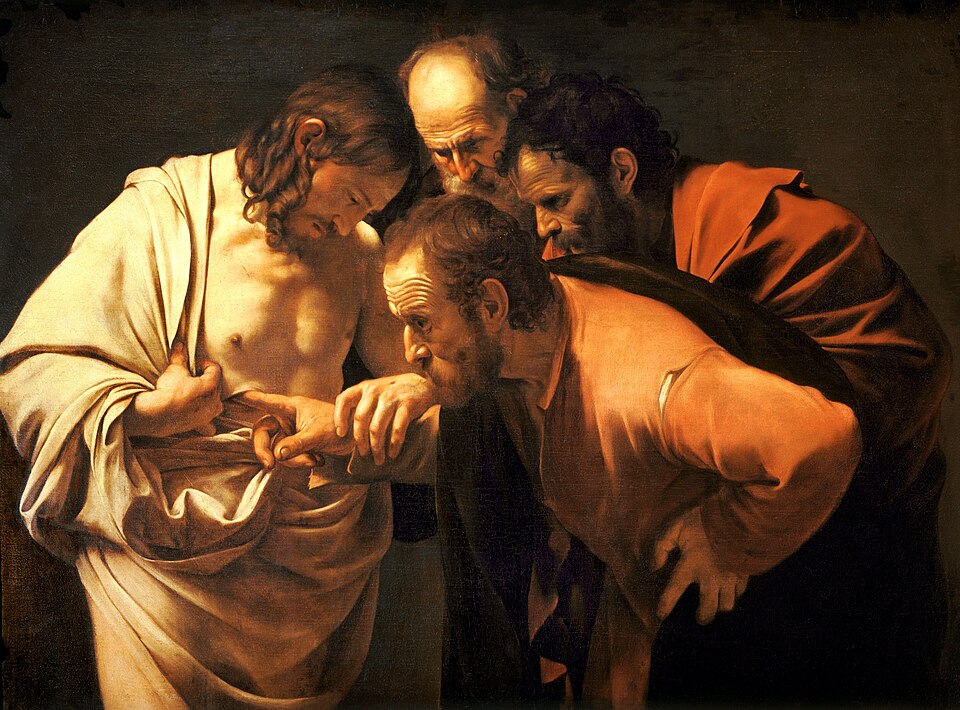 The Incredulity of Saint Thomas (c. 1601-1602, Potsdam, Sanssouci, Picture Gallery): faith that demands proof (Jn 20, 24-29), set against Hume's question of testimony to miracles Hume · Read the section · Annexe: The Gospel of John: the Word made flesh
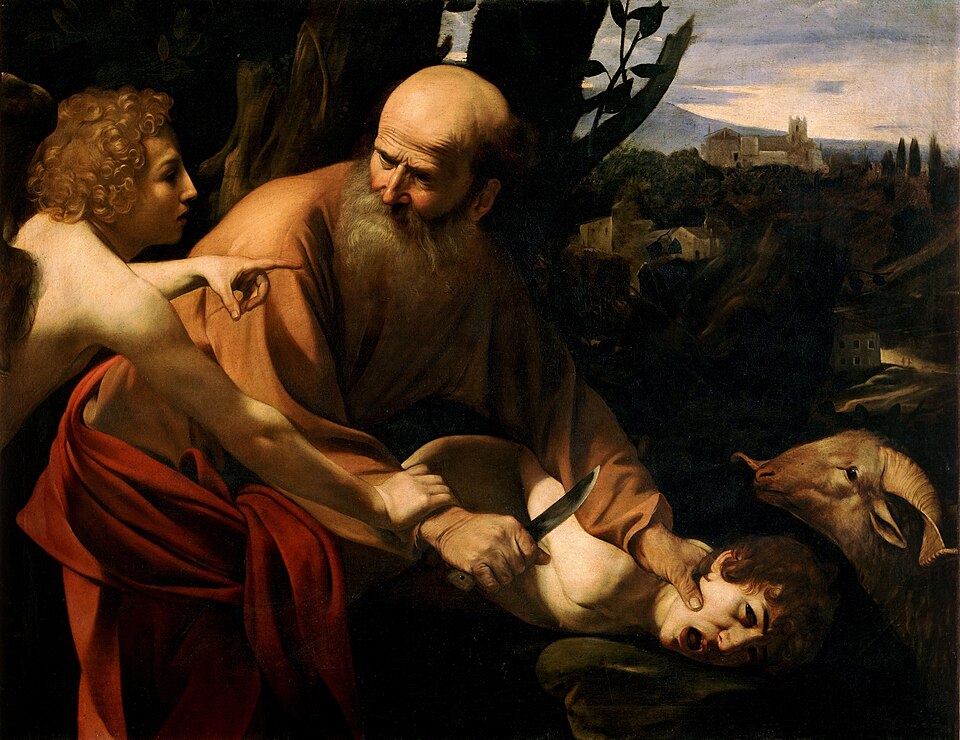 The Sacrifice of Isaac (c. 1603, Florence, Uffizi Gallery): human sacrifice suspended and replaced by the ram (Gn 22), a key moment in Girard's reading of the Bible Girard · Read the section · Annexe: The patriarchs: Abraham, the sacrifice of Isaac, Jacob · Annexe: Sacrifice in the Bible: from Abel's altar to self-offering
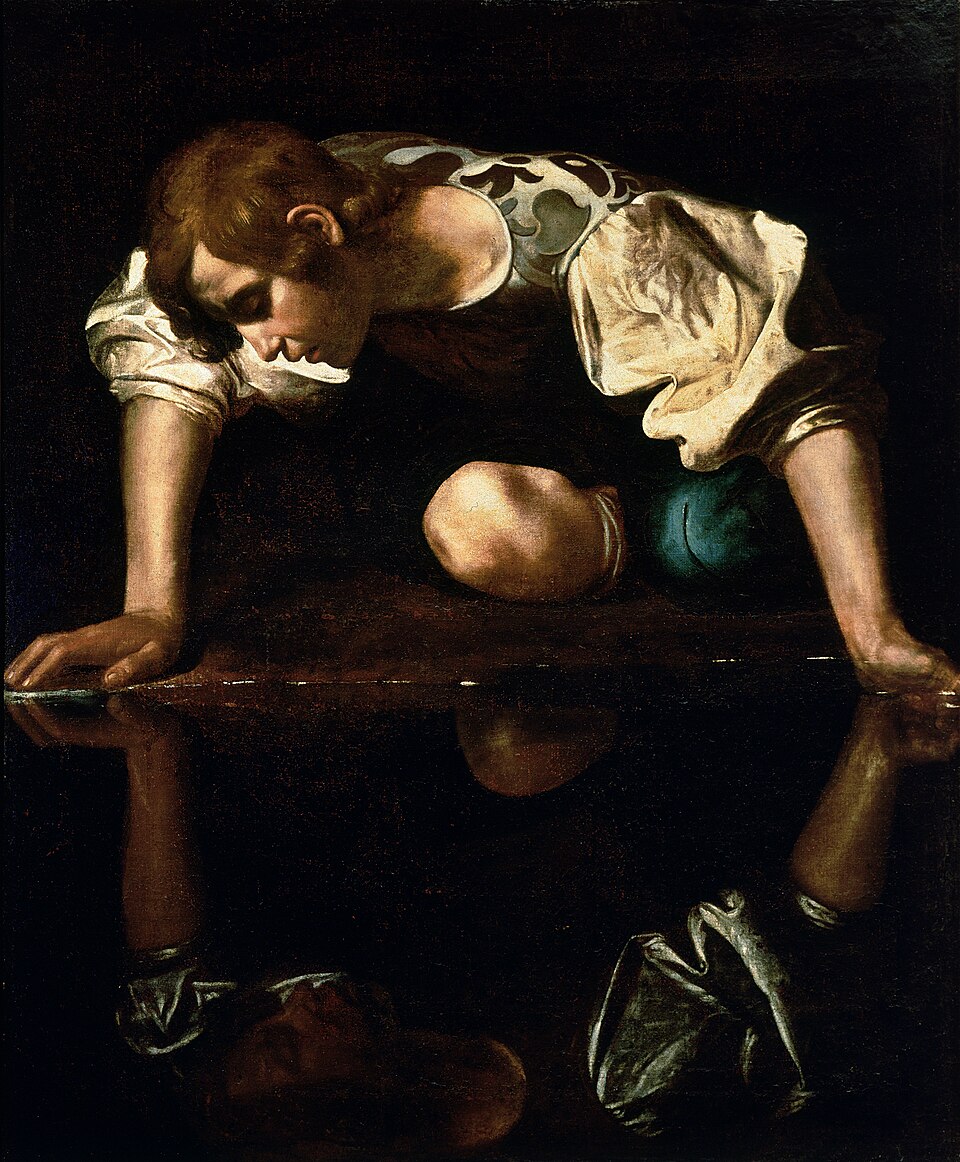 Narcissus (c. 1597-1599, Rome, Galleria Nazionale d'Arte Antica) Annexe: Narcissus and Echo: the reflection, the voice, narcissism
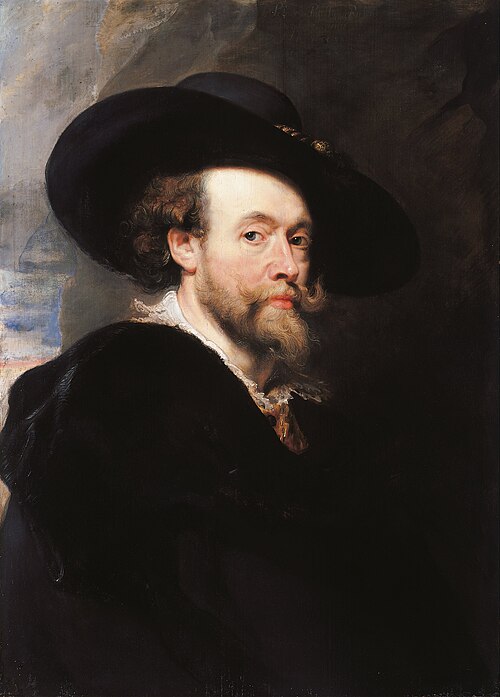 Peter Paul Rubens1577-1640
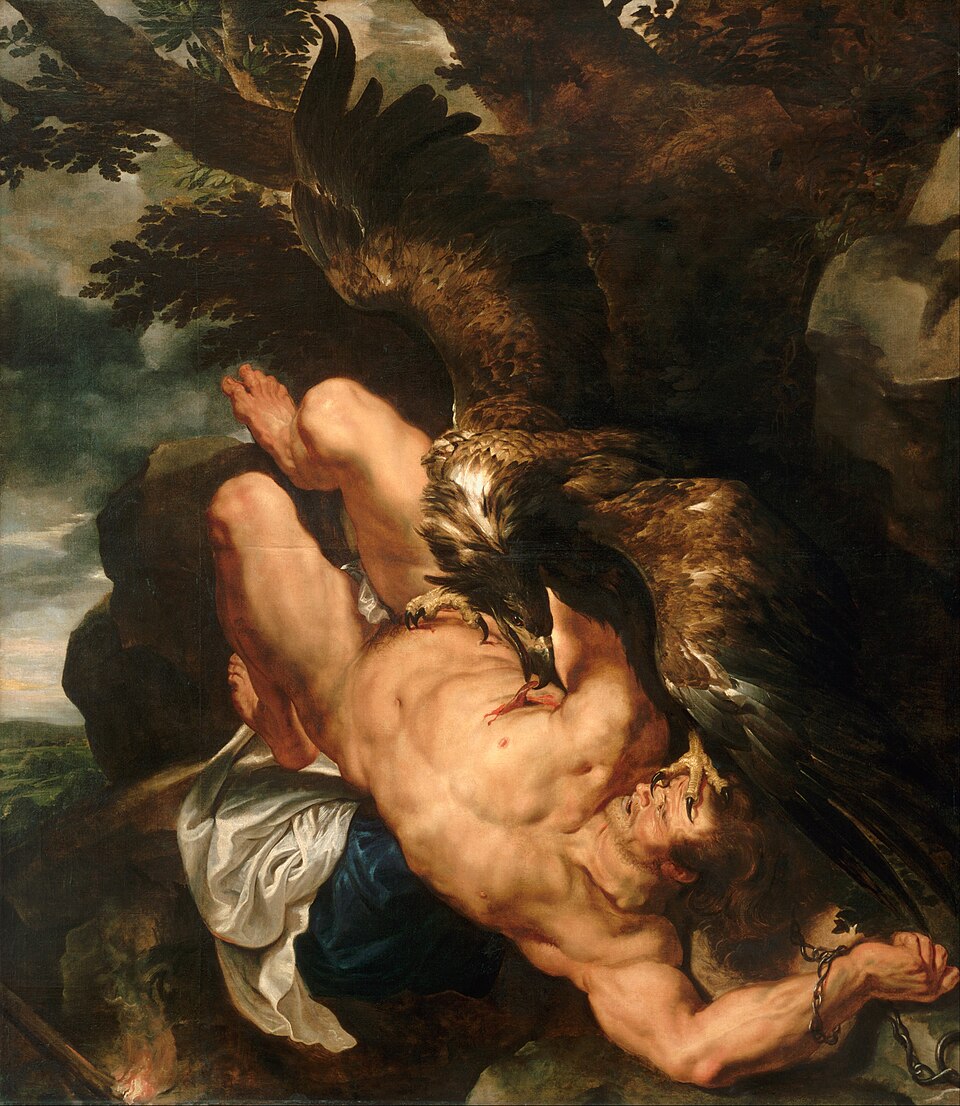 Peter Paul Rubens and Frans Snyders, Prometheus Bound (1611-1618, Philadelphia, Philadelphia Museum of Art) Annexe: Prometheus and Pandora: the sharing of the sacrifice, fire, evil
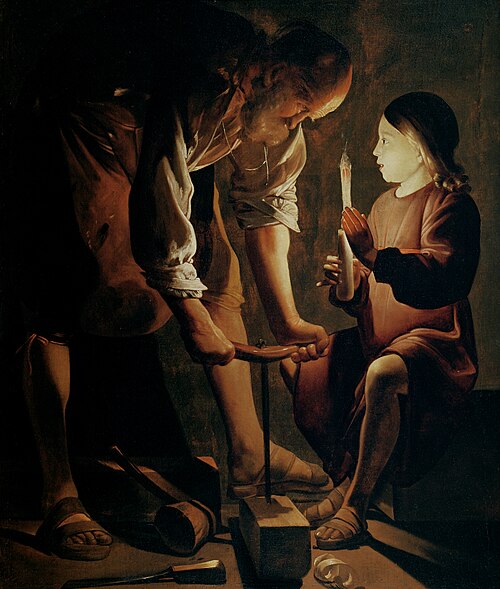 Georges de La Tour1593-1652
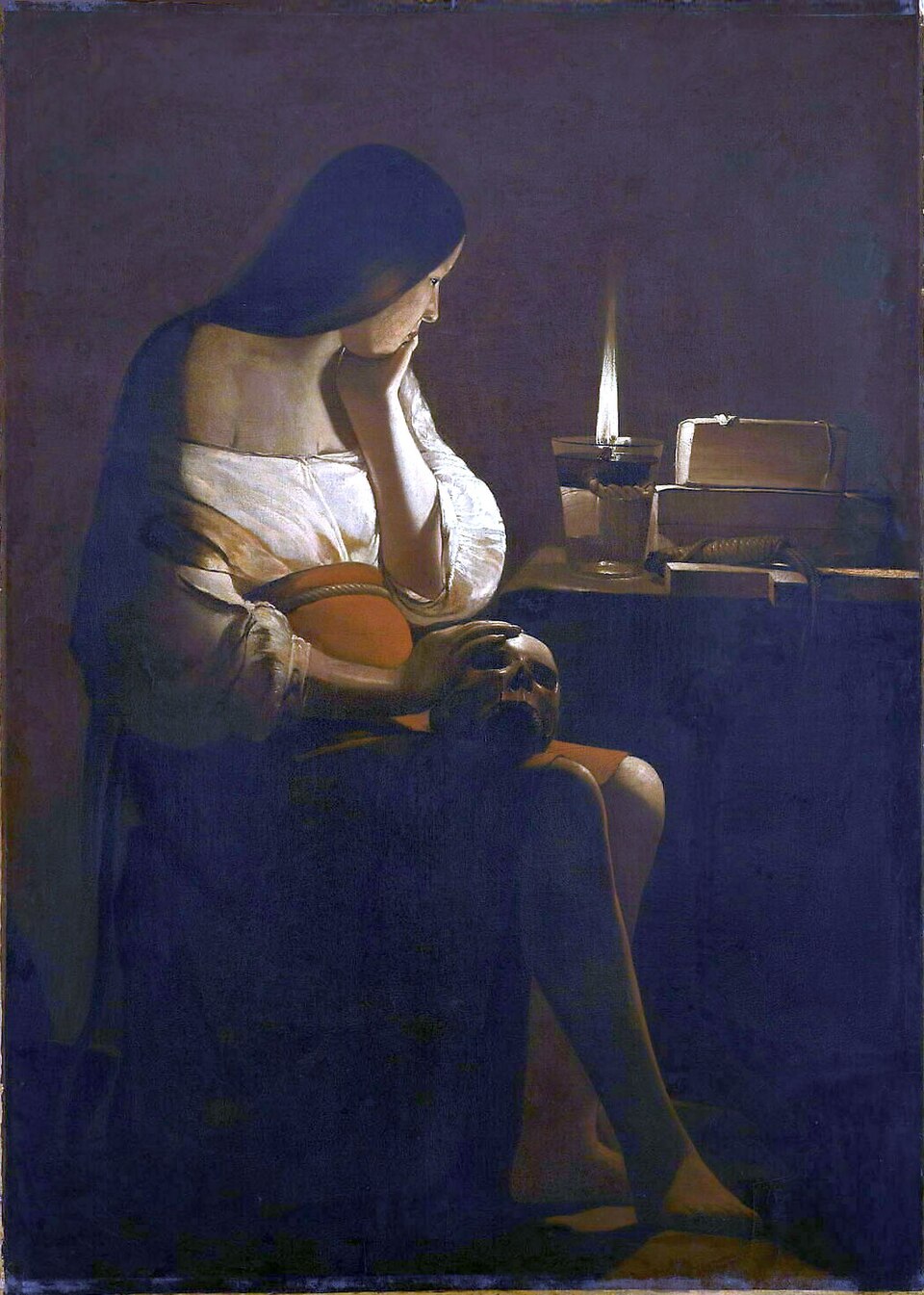 The Magdalen with the Smoking Flame, known as the Terff Magdalen (c. 1640-1645, Paris, Musée du Louvre): the skull, the books and the flame, a meditation on death that joins the ancient spiritual exercise in Hadot's sense Pierre Hadot · Read the section · Annexe: The Passion and the Resurrection: the four accounts and what history retains
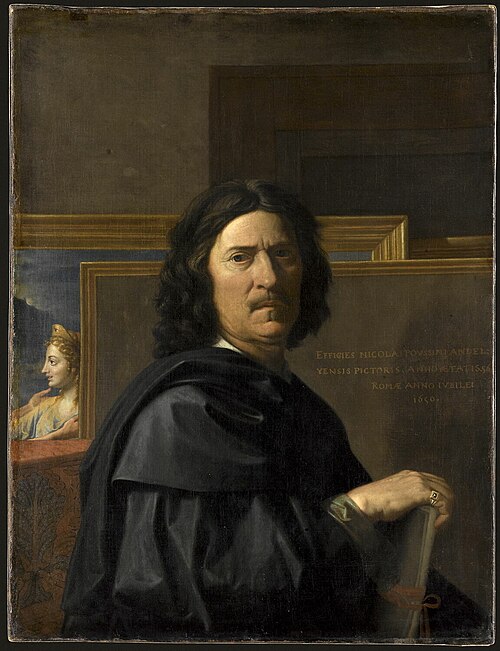 Nicolas Poussin1594-1665
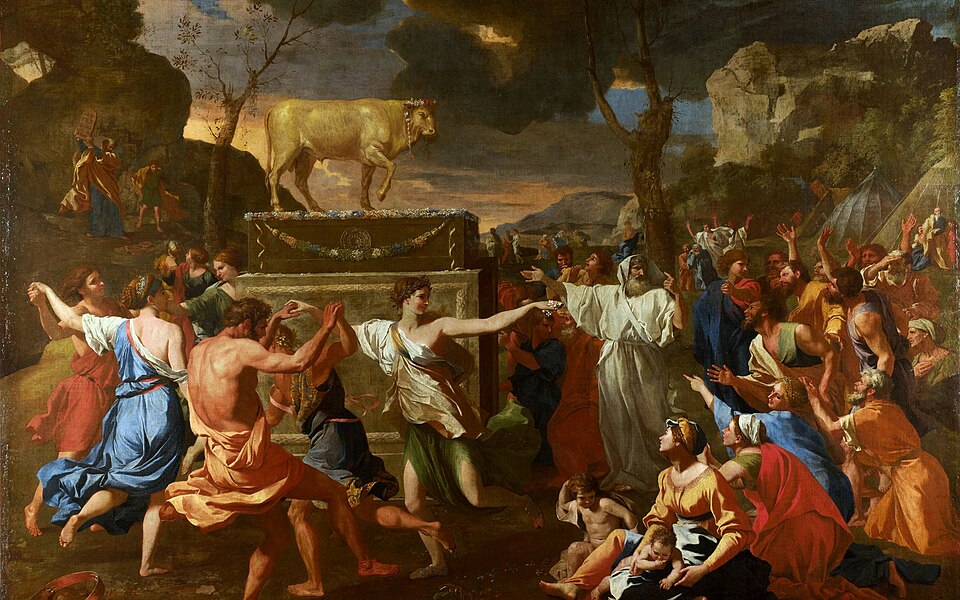 The Adoration of the Golden Calf (c. 1633-1634, London, National Gallery): the god made by human hands (Ex 32), an ancient figure of what Feuerbach generalizes: in God, man worships what he has himself projected Ludwig Feuerbach · Read the section · Annexe: Exodus: Moses, the departure from Egypt, Sinai and the Law
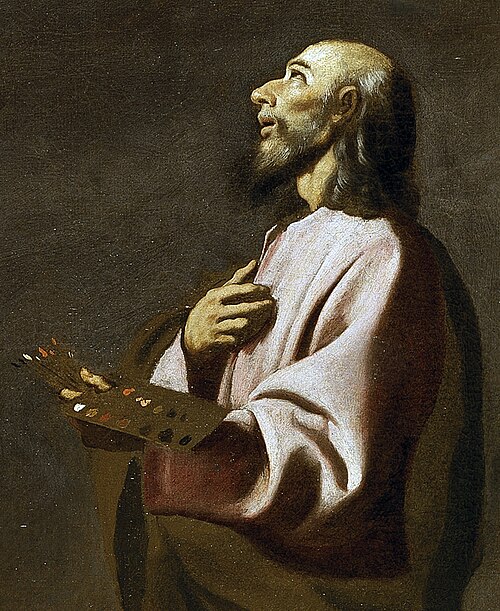 Francisco de Zurbarán1598-1664
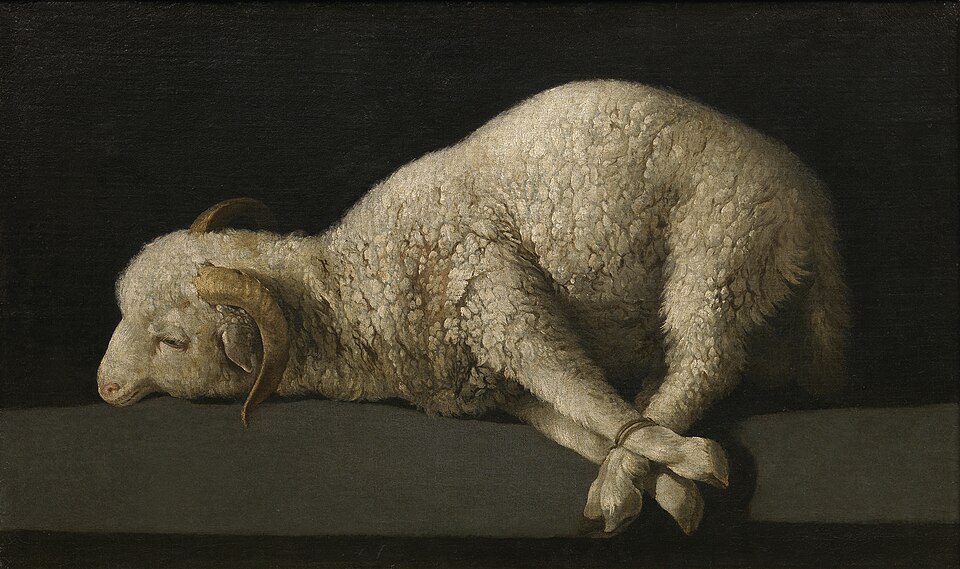 Agnus Dei (c. 1635-1640, Madrid, Prado): the bound lamb of the sacrificial victim (Jn 1, 29), in which Girard reads the Christian revelation of the innocence of the scapegoat victim Girard · Read the section · Annexe: Sacrifice in the Bible: from Abel's altar to self-offering
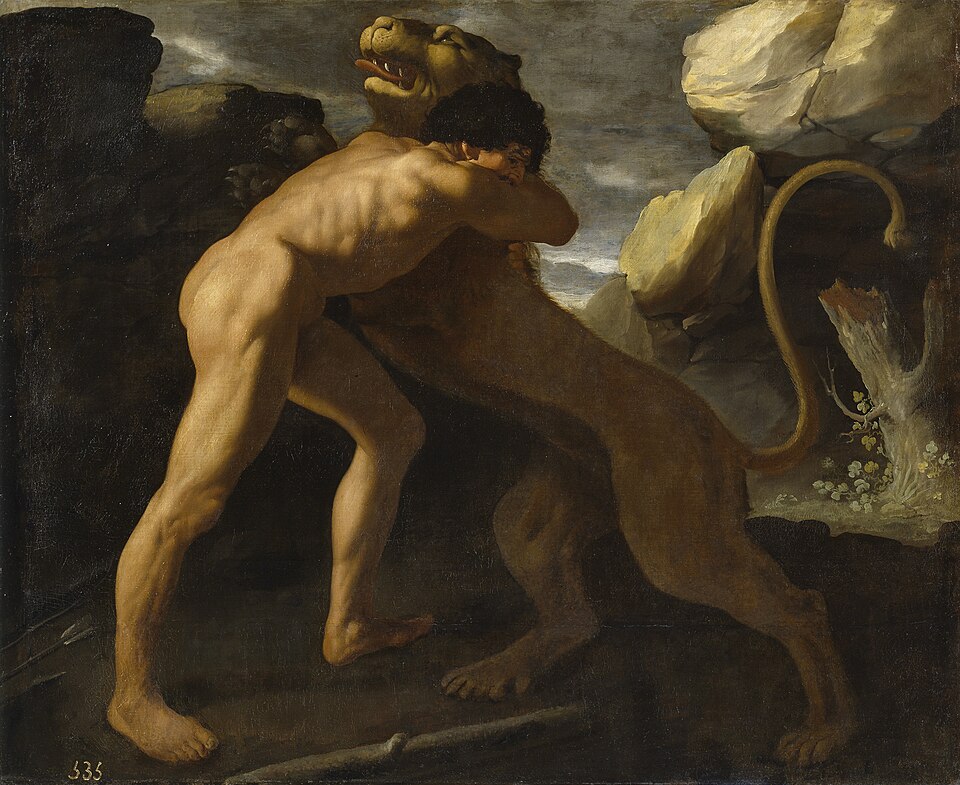 Hercules and the Nemean Lion (1634, Madrid, Prado), from the series of the labours of Hercules painted for the Buen Retiro palace Annexe: Heracles: the labours, the choice, the apotheosis
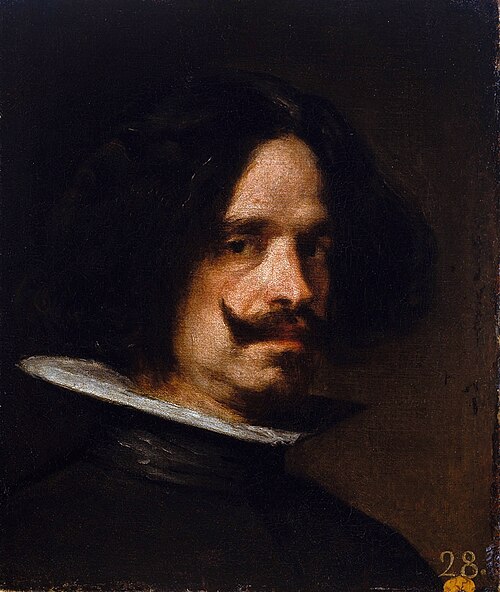 Diego Velázquez1599-1660
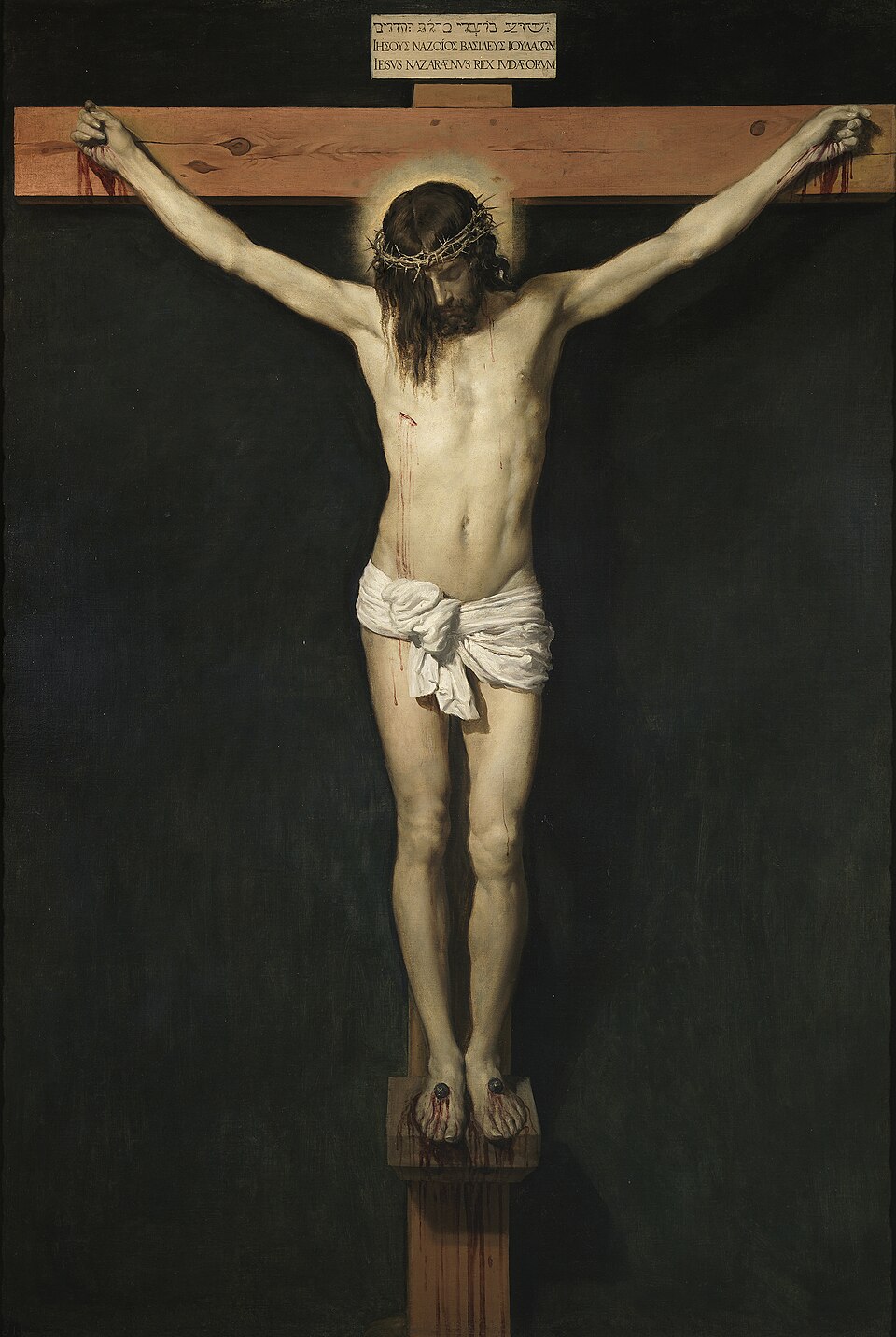 Christ Crucified (c. 1632, Madrid, Prado): the speculative Good Friday, in which Hegel takes up the “Gott selbst ist tot” of the Lutheran hymn Georg Wilhelm Friedrich Hegel · Read the section · Annexe: The Passion and the Resurrection: the four accounts and what history retains
17th century
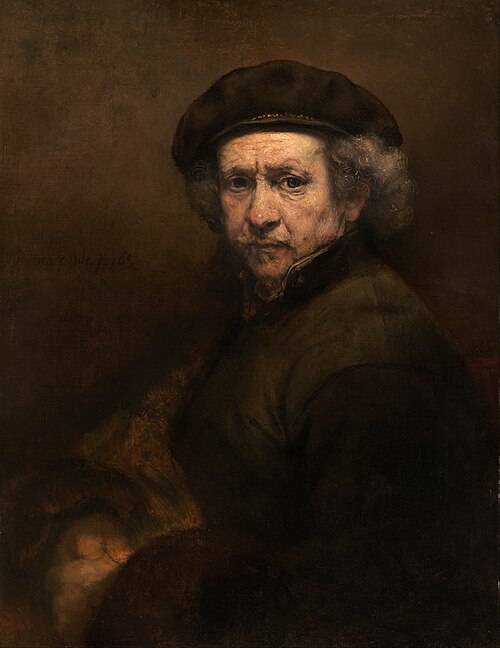 Rembrandt1606-1669
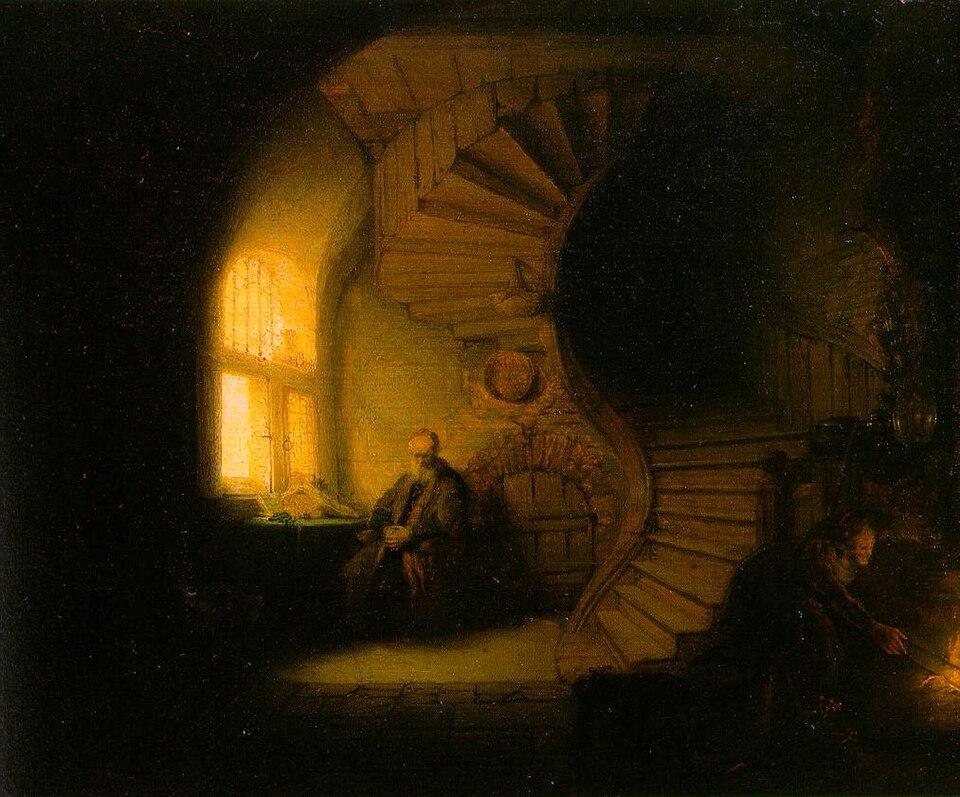 Philosopher in Meditation (1632, Paris, Musée du Louvre) Couverture · See the cover
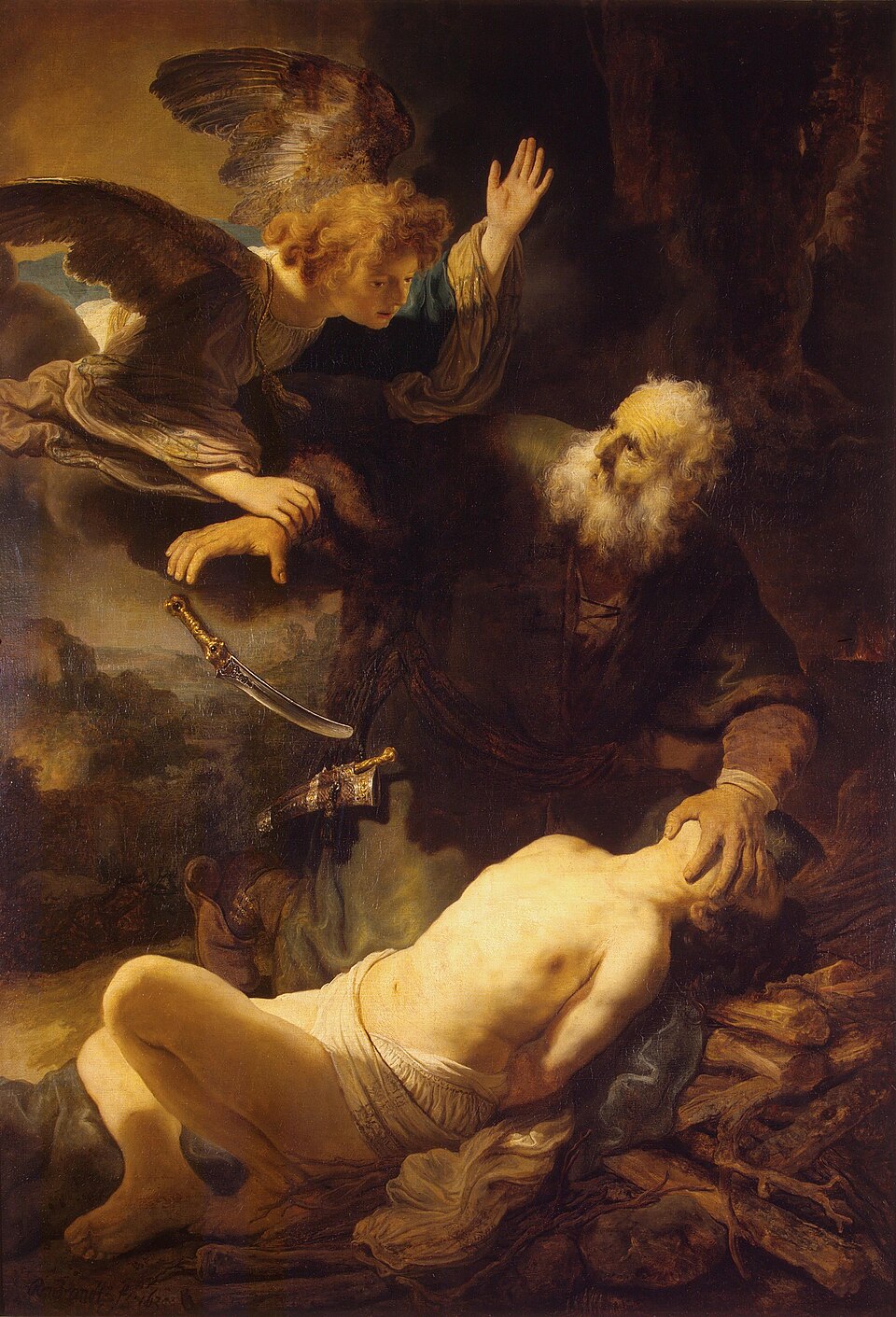 The Sacrifice of Isaac (1635, Saint Petersburg, Hermitage): the God of Abraham and Isaac, whom the Memorial sets against the God of the philosophers Pascal · Read the section · Annexe: The patriarchs: Abraham, the sacrifice of Isaac, Jacob
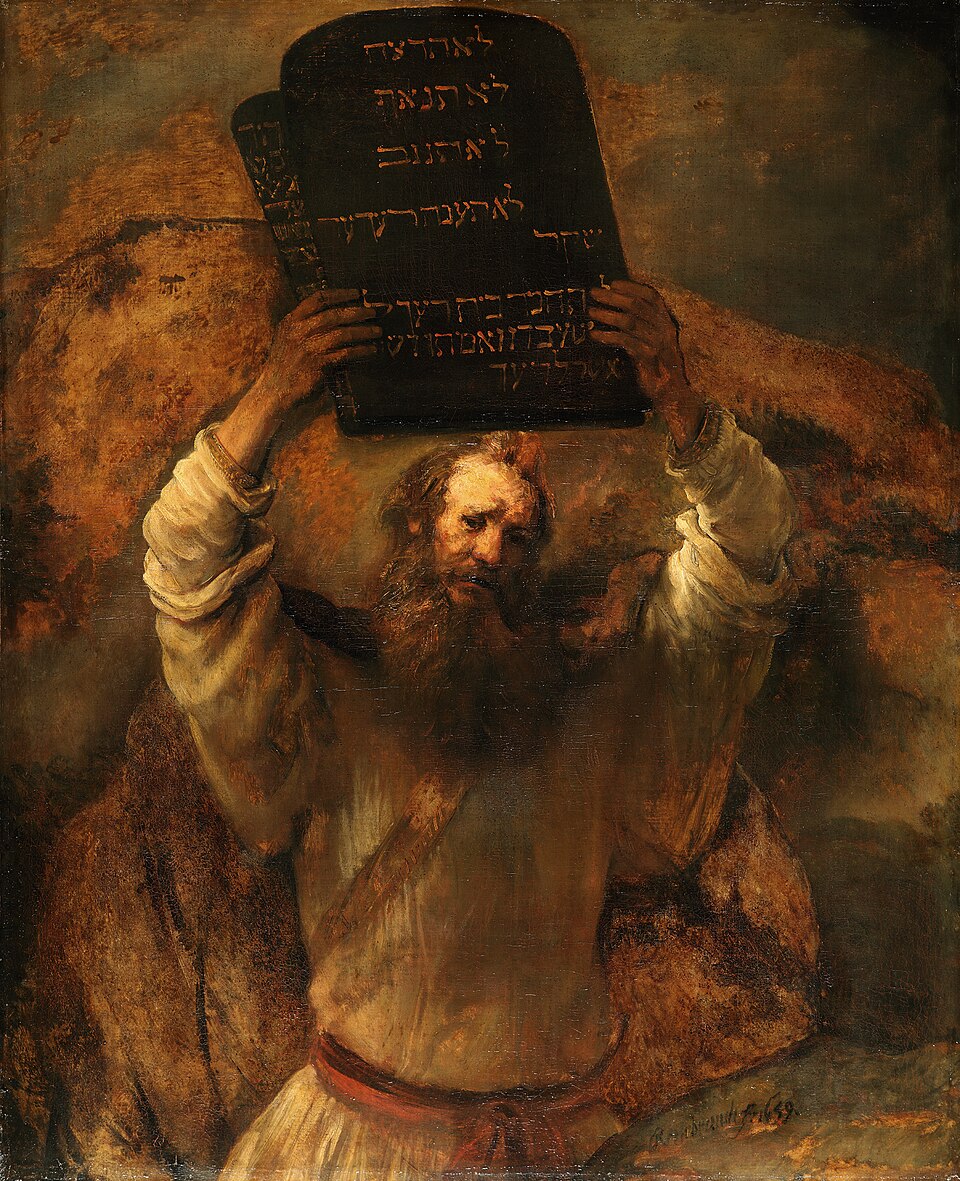 Moses Breaking the Tablets of the Law (1659, Berlin, Gemäldegalerie): it is debated whether he is breaking them (Ex 32, 19) or presenting them to the people; Moses is the prophet to whom God shows only his back (Ex 33, 23), that is, according to the Guide for the Perplexed (I, 54), only his attributes of action Maimonides · Read the section · Annexe: Exodus: Moses, the departure from Egypt, Sinai and the Law
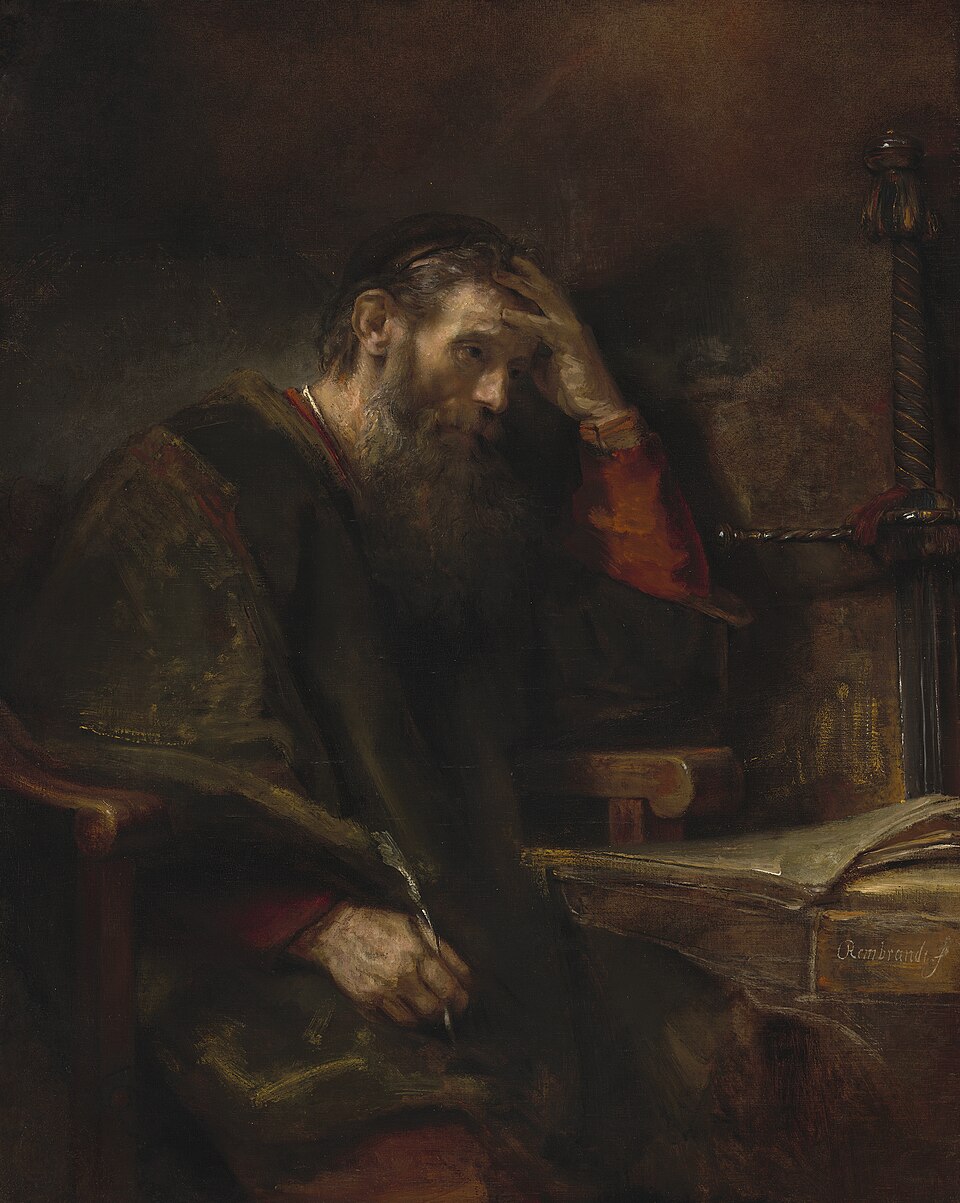 Rembrandt (and workshop?), The Apostle Paul (c. 1657, Washington, National Gallery of Art): the apostle meditating before his letters, the sword of his martyrdom in his hand Paul of Tarsus · Read the section · Annexe: The letters of Paul: Romans, Corinthians and the others
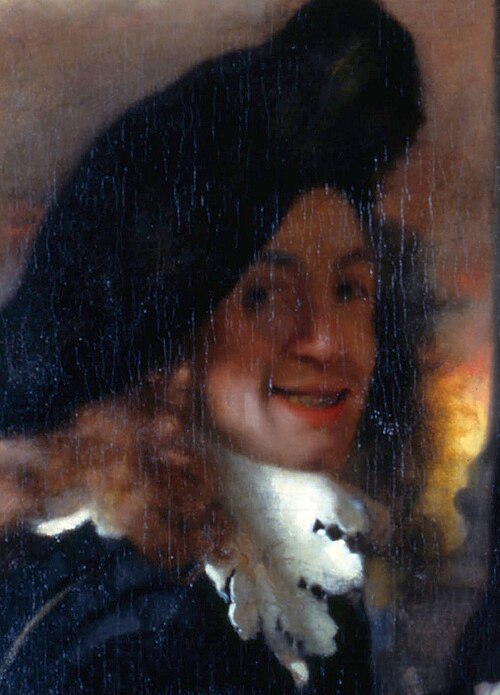 Johannes Vermeer1632-1675
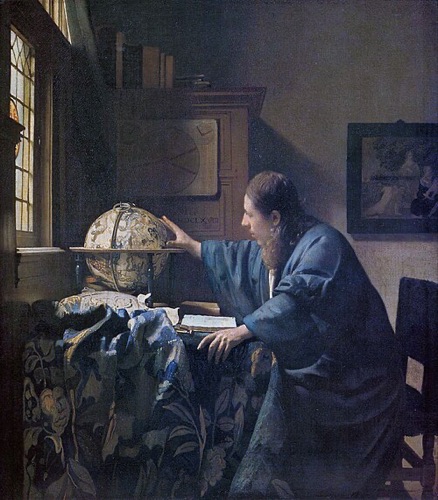 The Astronomer (1668, Paris, Musée du Louvre) Part Three · See the part
18th century
Pierre-Antoine Demachy1723-1807
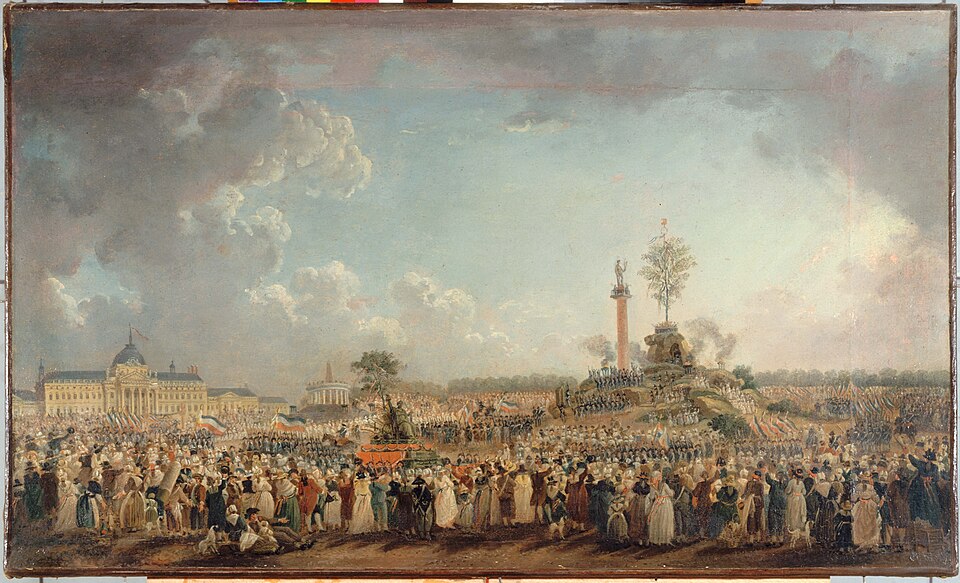 The Festival of the Supreme Being at the Champ-de-Mars, 8 June 1794 (20 Prairial Year II) (Paris, Musée Carnavalet): the civic cult of Robespierre, a reader of the civil religion of The Social Contract (IV, 8) Rousseau · Read the section
 Joseph Wright of Derby1734-1797
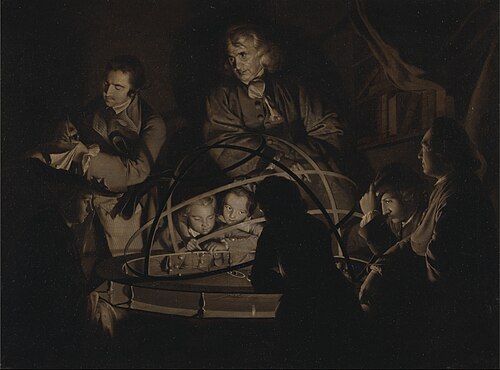 A Philosopher Lecturing on the Orrery (c. 1766, Derby Museum) Part Four · See the part
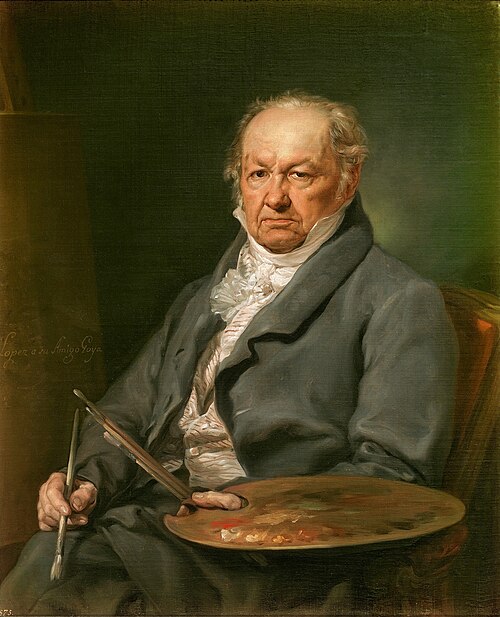 Francisco de Goya1746-1828
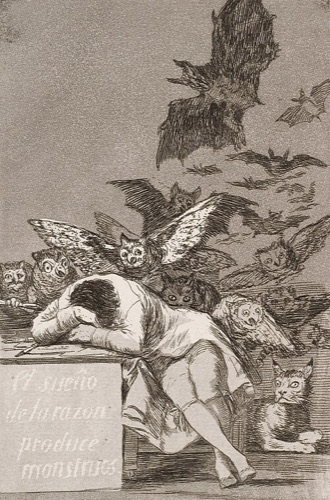 The Sleep of Reason Produces Monsters, Caprichos no. 43 (1797-1799) Prologue · See the part
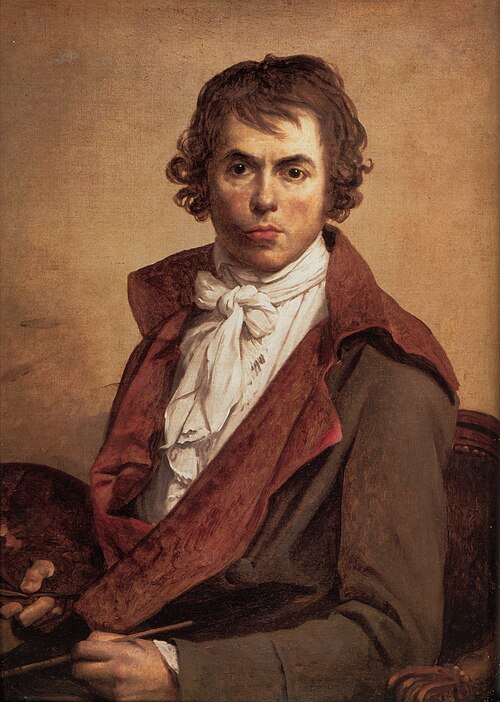 Jacques-Louis David1748-1825
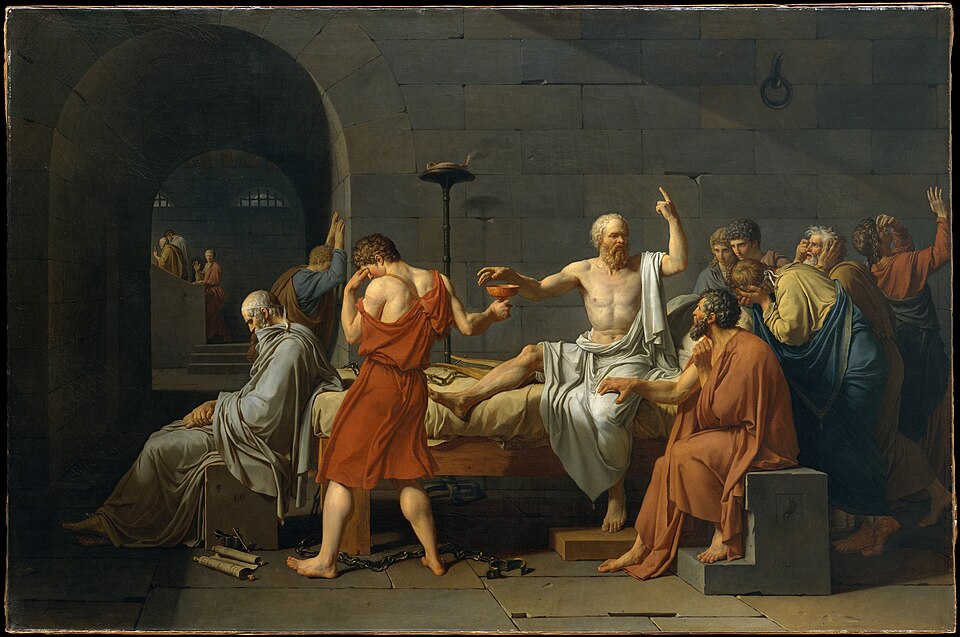 The Death of Socrates (1787, New York, Metropolitan Museum of Art): condemned in 399 BCE for impiety (ἀσέβεια, asebeia) and corrupting the young, Socrates drinks the hemlock; David places at the foot of the bed an aged Plato, whom the Phaedo (59b) says was absent that day Plato · Read the section · Annexe: The religion of the Greek city: sacrifices, festivals, oracles, impiety trials
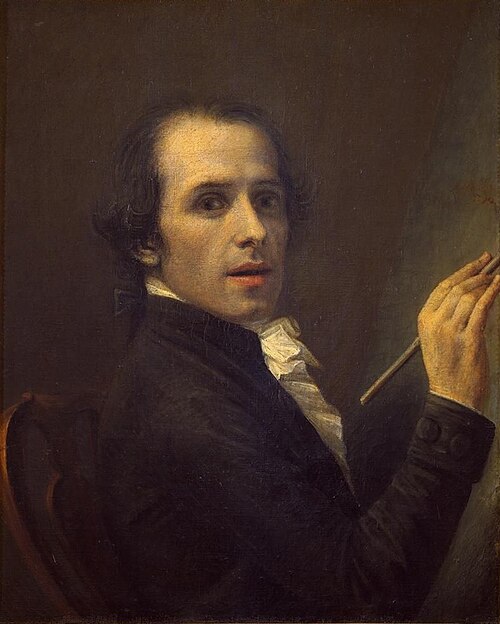 Antonio Canova1757-1822
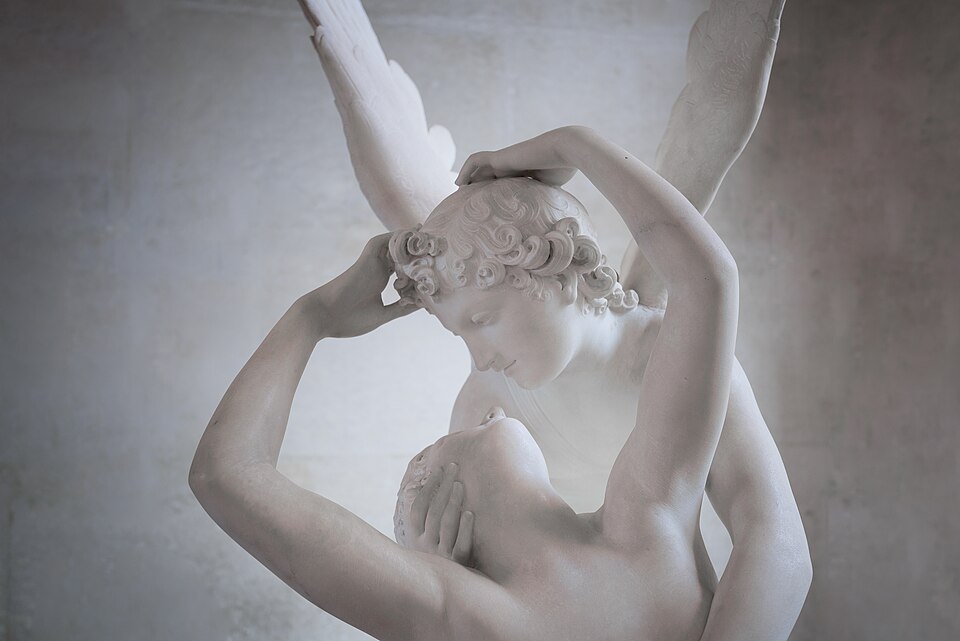 Psyche Revived by Cupid's Kiss (1787-1793, Paris, Musée du Louvre) Annexe: Eros and Psyche: the primordial god, the ladder of the Symposium, Apuleius's tale
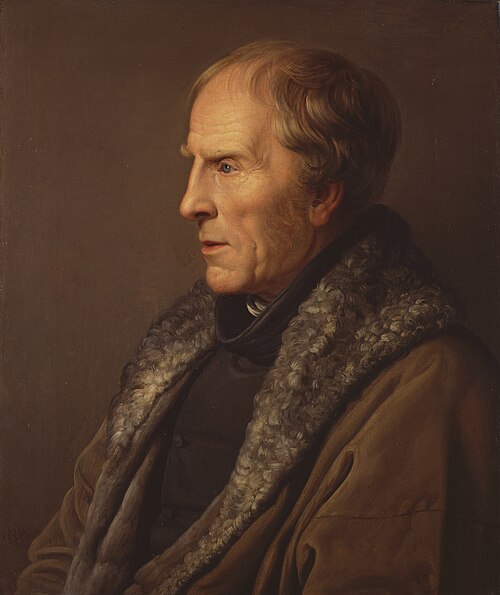 Caspar David Friedrich1774-1840
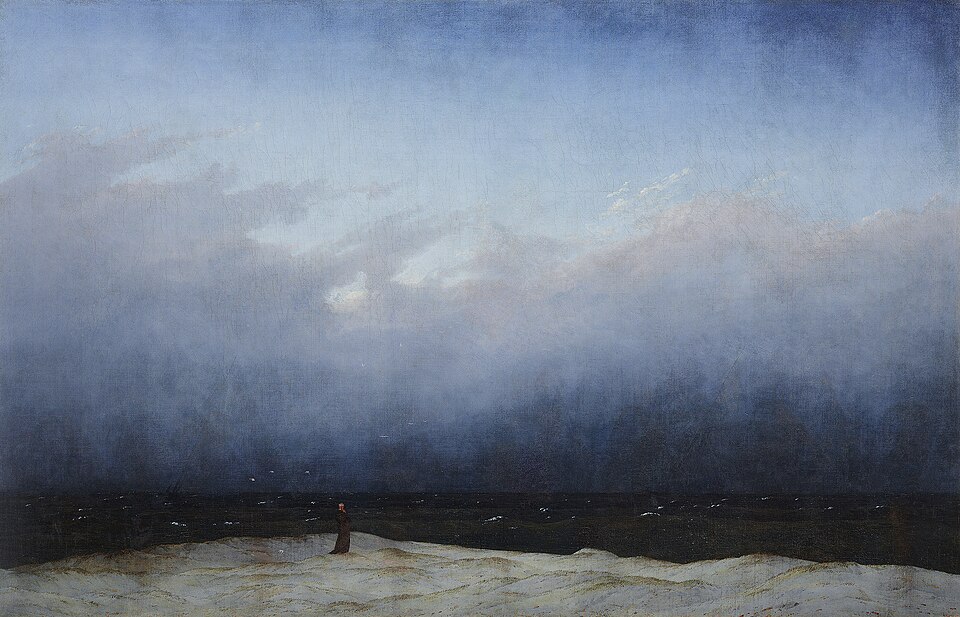 The Monk by the Sea (1808-1810, Berlin, Alte Nationalgalerie): the solitary man before immensity, a figure of wonder that there should be a world rather than nothing Why is there something rather than nothing? A constructed debate · Read the section
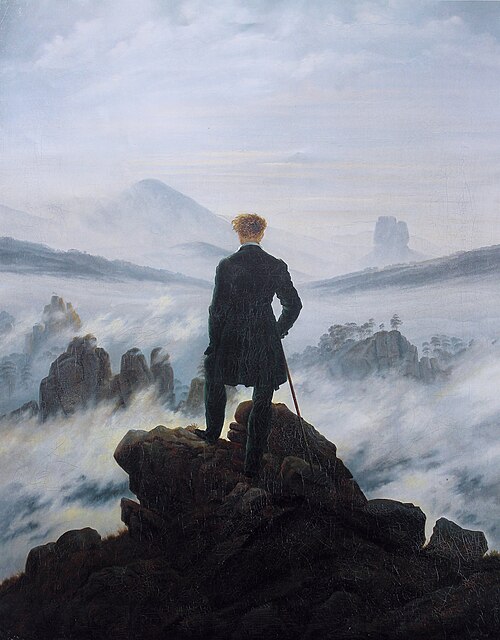 Wanderer above the Sea of Fog (c. 1818, Hamburg, Kunsthalle) Part Five · See the part
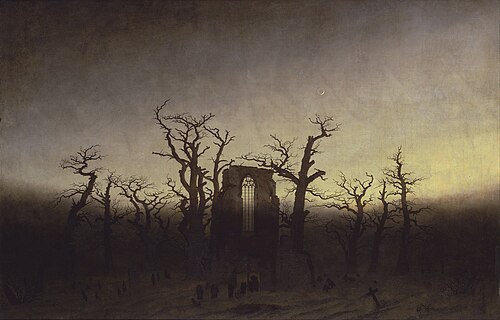 The Abbey in the Oakwood (1809-1810, Berlin, Alte Nationalgalerie) Part Ten · See the part
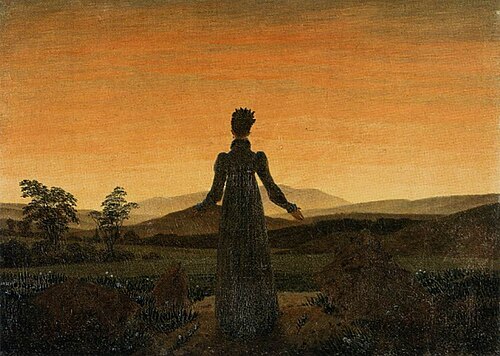 Woman before the Setting Sun (c. 1818, Essen, Museum Folkwang) Conclusion · See the part
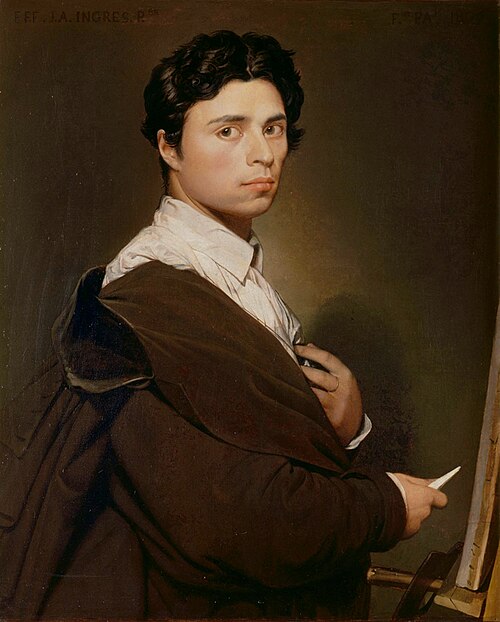 Jean-Auguste-Dominique Ingres1780-1867
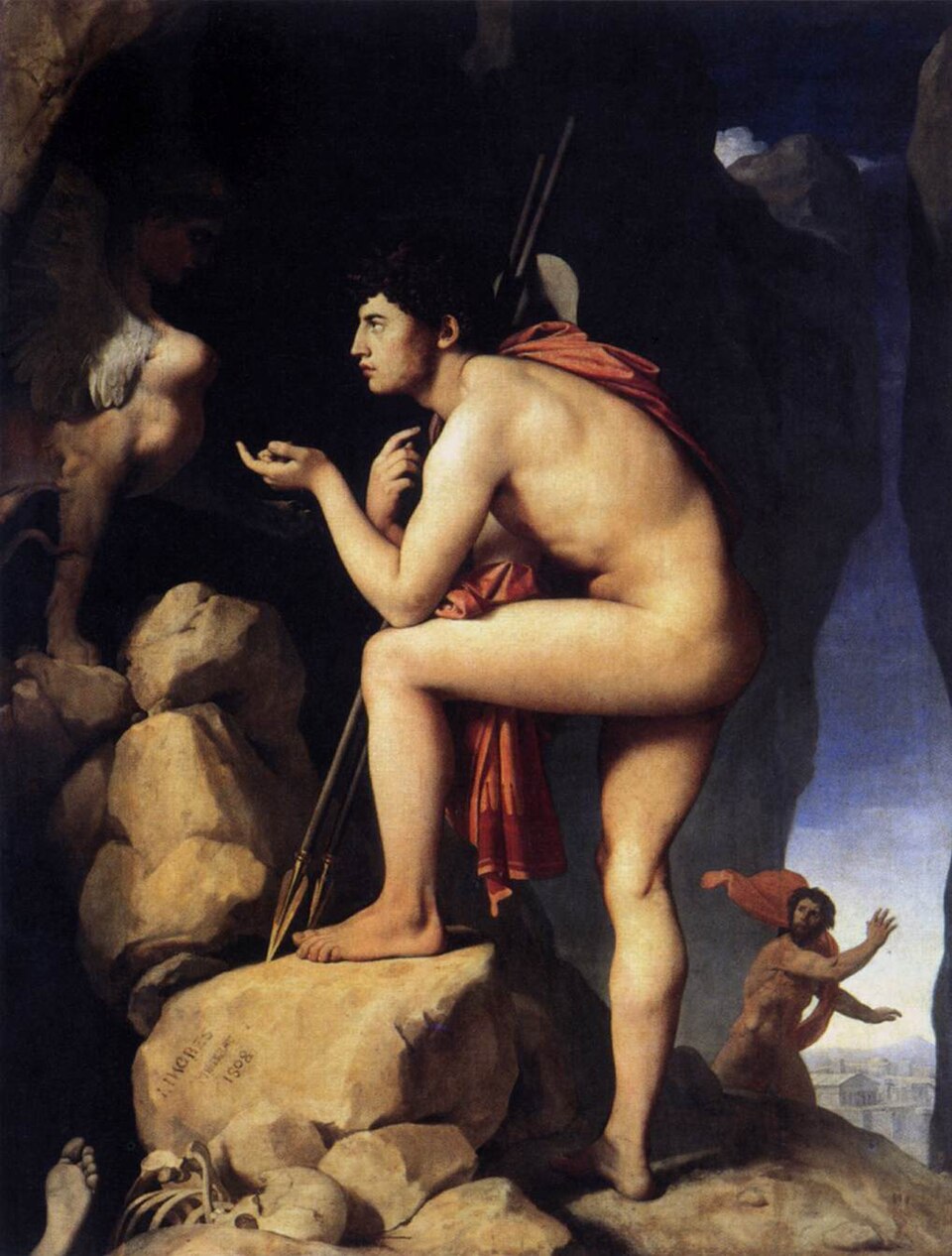 Oedipus Explains the Riddle of the Sphinx (1808, Paris, Musée du Louvre) Annexe: Oedipus: the oracle, the Sphinx, the plague of Thebes
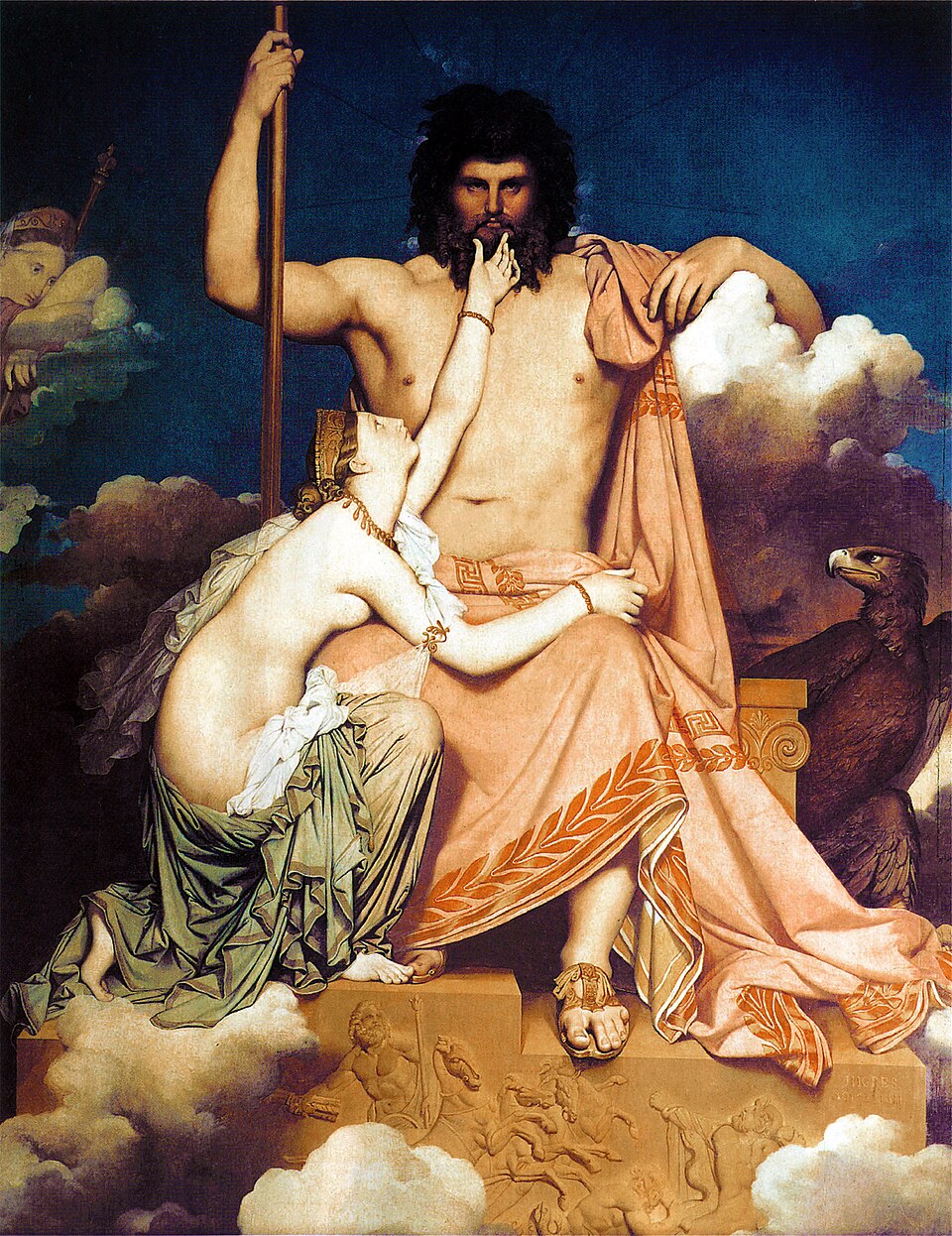 Jupiter and Thetis (1811, Aix-en-Provence, Musée Granet): Thetis entreats Zeus on behalf of her son Achilles, in the first book of the Iliad Annexe: Greek myths: sources, gods and divine generations · Annexe: The Trojan War: Iphigenia at Aulis, the wrath of Achilles, Priam
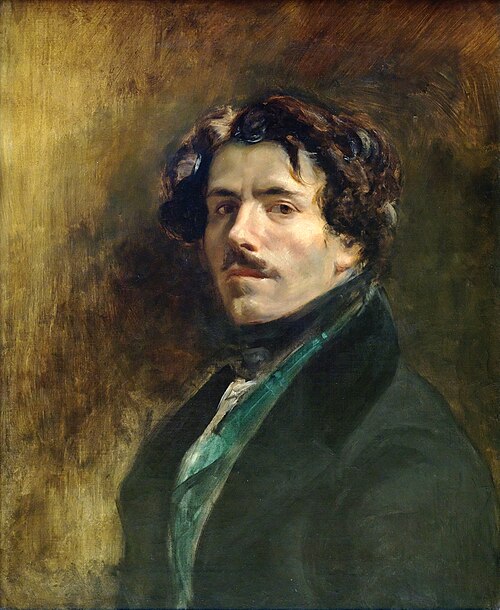 Eugène Delacroix1798-1863
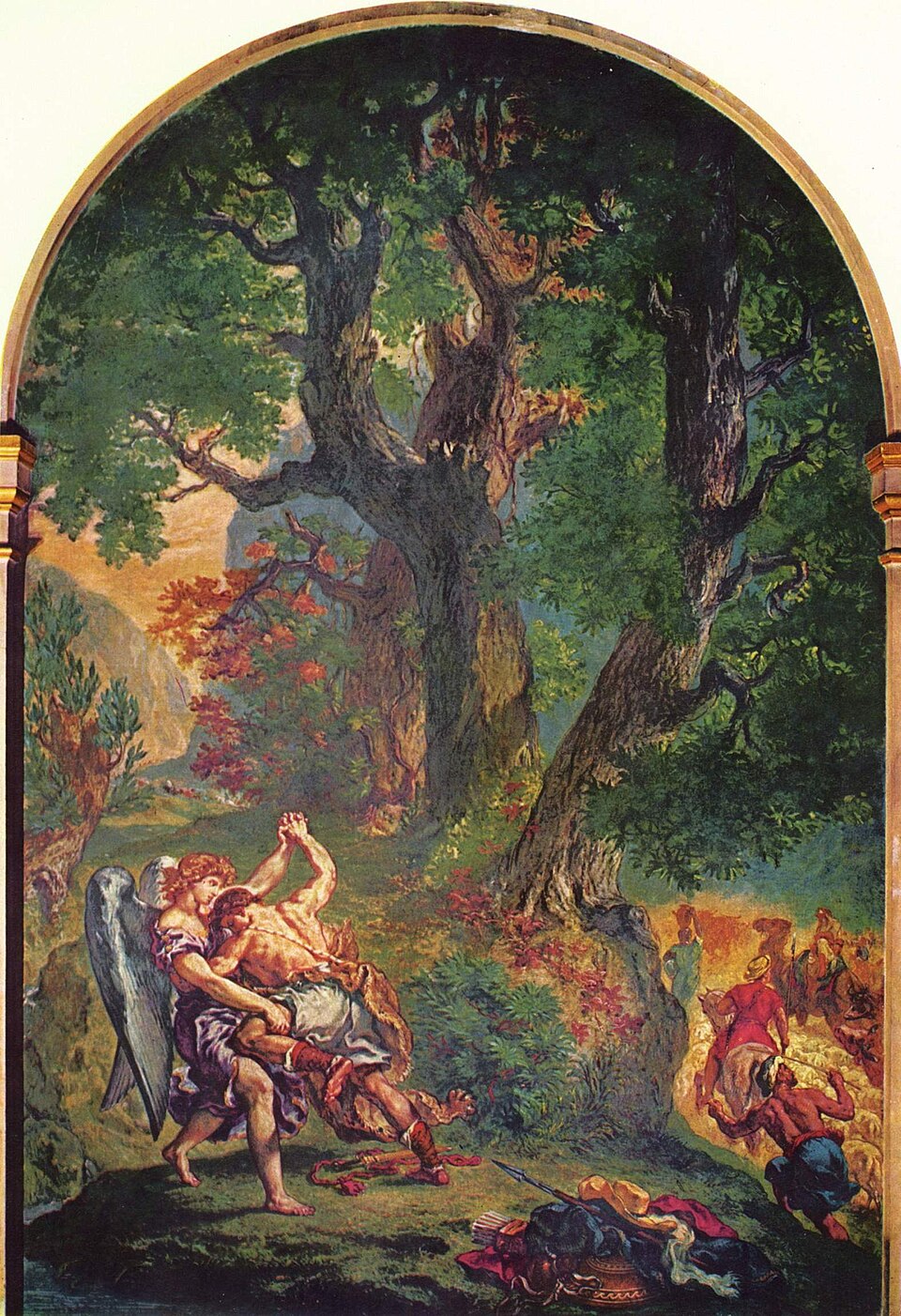 Jacob Wrestling with the Angel (1854-1861, Paris, church of Saint-Sulpice, Chapel of the Holy Angels): the night struggle of Gn 32, 25-33, an image of faith as a singular ordeal before God Søren Kierkegaard · Read the section · Annexe: The patriarchs: Abraham, the sacrifice of Isaac, Jacob
19th century
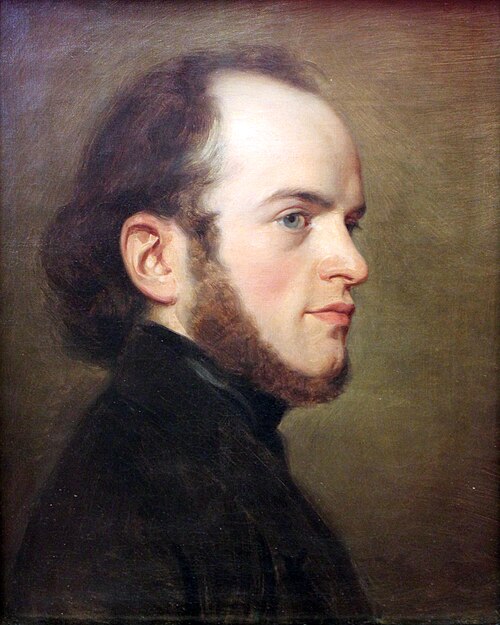 Adolph Menzel1815-1905
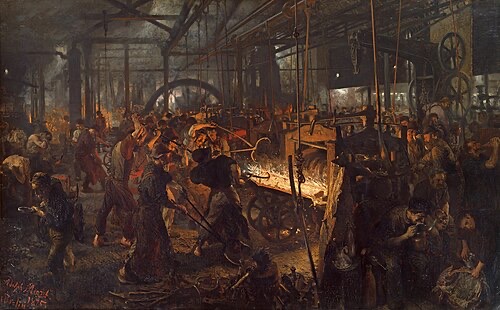 The Iron Rolling Mill (Modern Cyclopes) (1872-1875, Berlin, Alte Nationalgalerie) Part Six · See the part
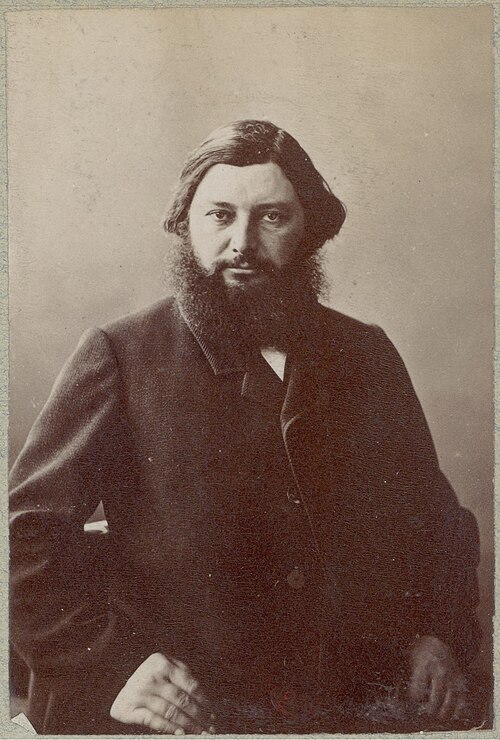 Gustave Courbet1819-1877
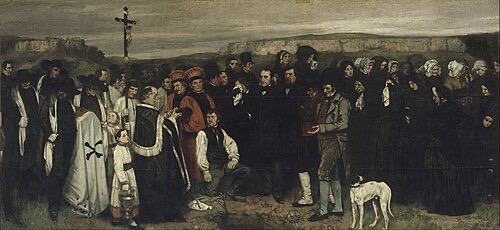 A Burial at Ornans (1849-1850, Paris, Musée d'Orsay) Part Nine · See the part
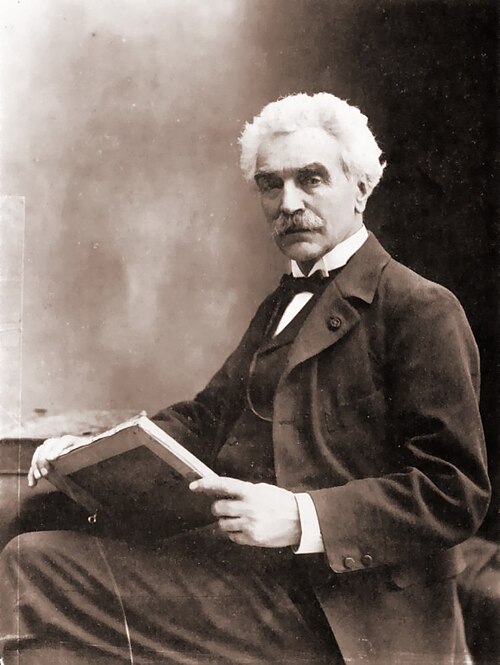 Jean-Léon Gérôme1824-1904
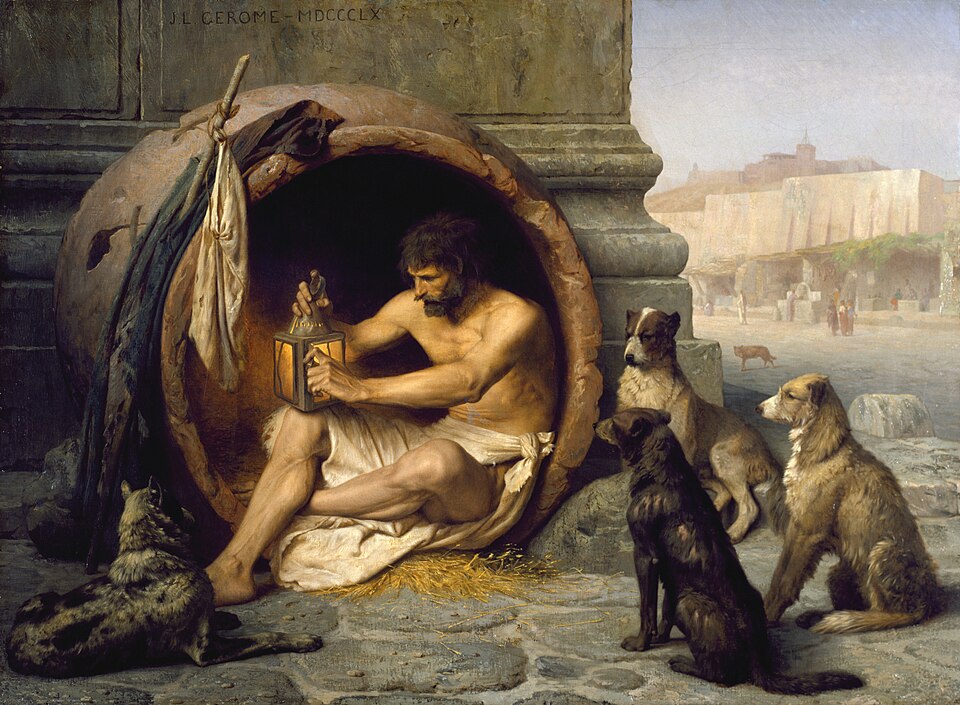 Diogenes (1860, Baltimore, Walters Art Museum): the lantern in broad daylight, model for the madman who seeks God in § 125 of The Gay Science Nietzsche · Read the section
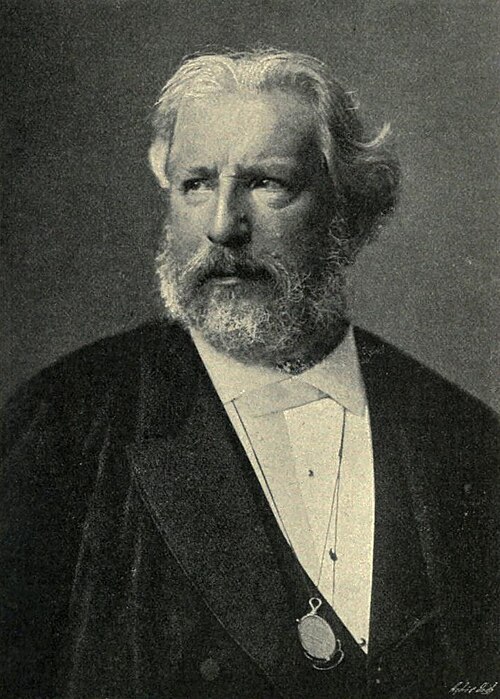 William-Adolphe Bouguereau1825-1905
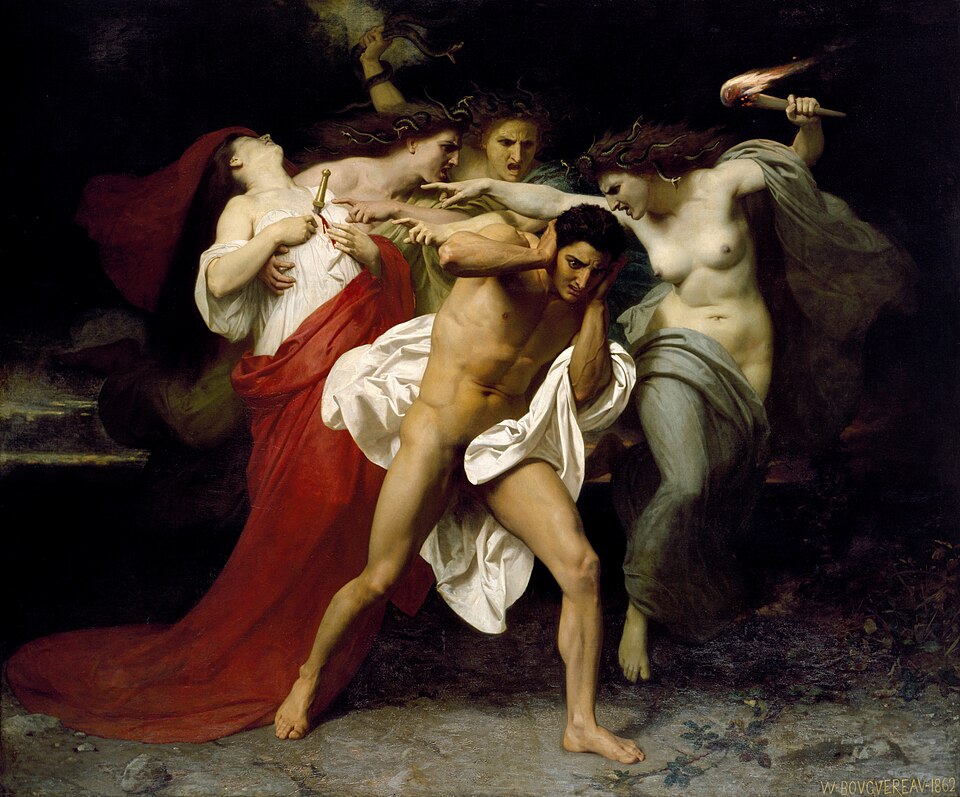 The Remorse of Orestes (1862, Norfolk, Chrysler Museum of Art) Annexe: The Atreids: Agamemnon, Clytemnestra, Orestes and the Erinyes
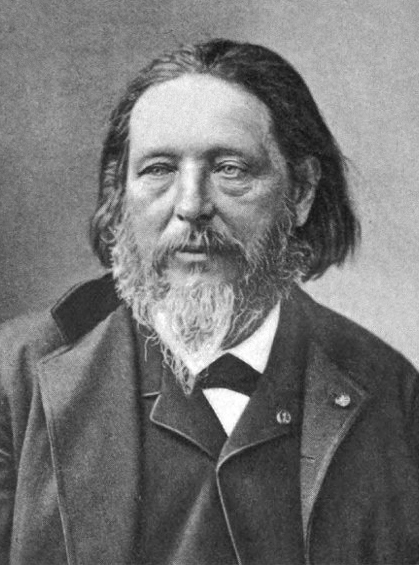 Jules Breton1827-1906
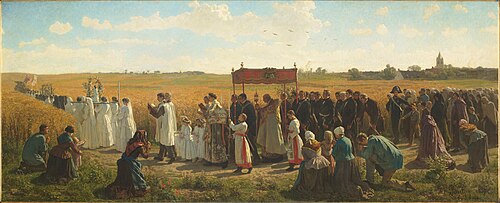 The Blessing of the Wheat in Artois (1857): lived religion, the object of the sciences of religion Part Eight · See the part
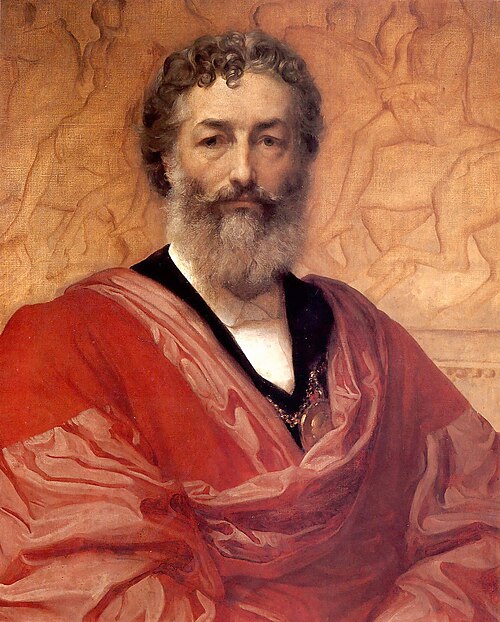 Frederic Leighton1830-1896
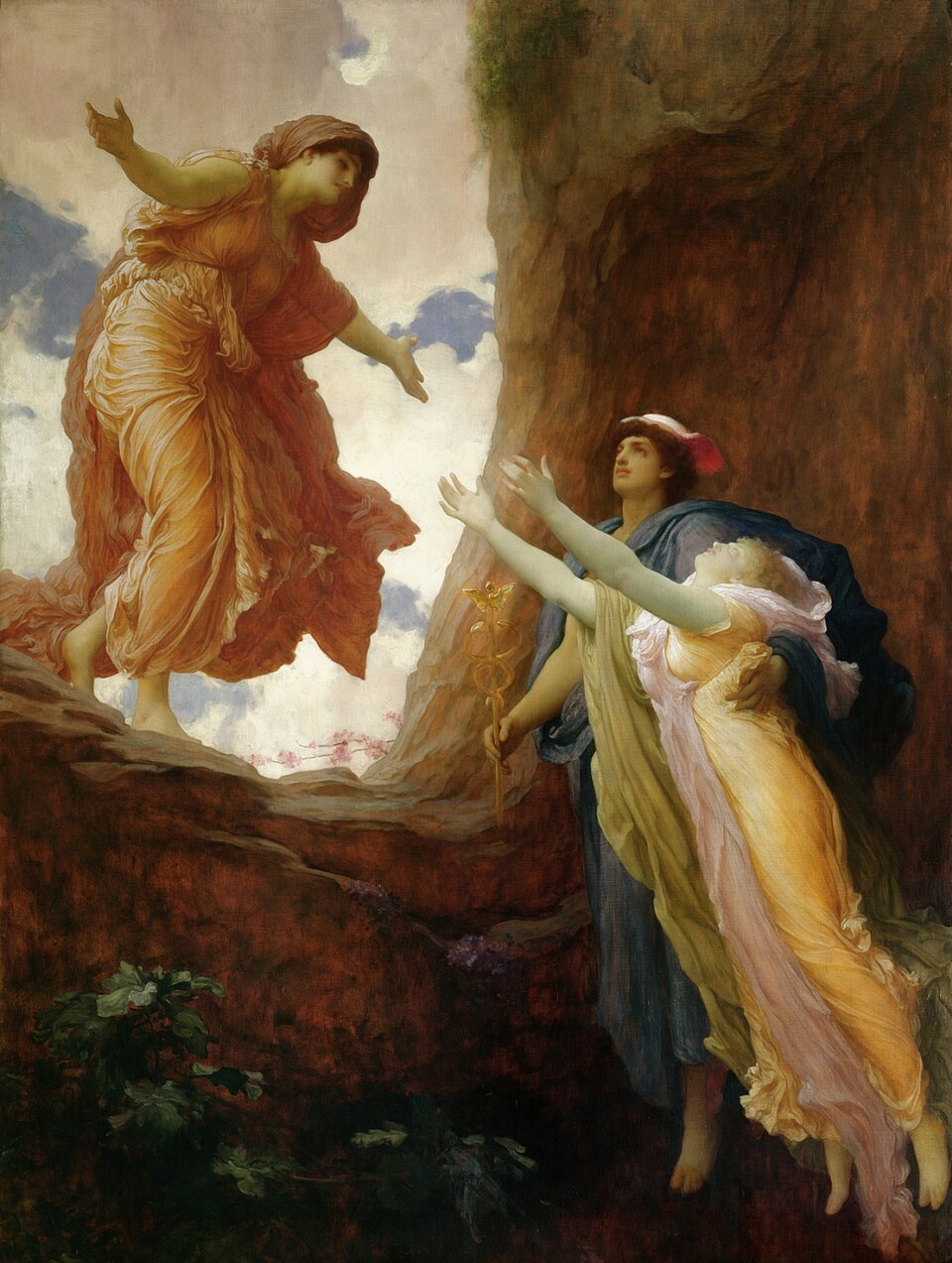 The Return of Persephone (1891, Leeds Art Gallery): Hermes brings Persephone back from the underworld to her mother Demeter Annexe: The mysteries and Orphism: Eleusis, Orpheus, Cybele, Isis, Mithras
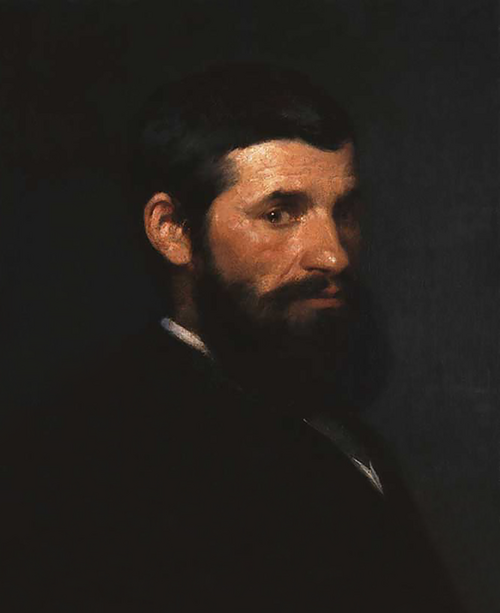 Nikiphoros Lytras1832-1904
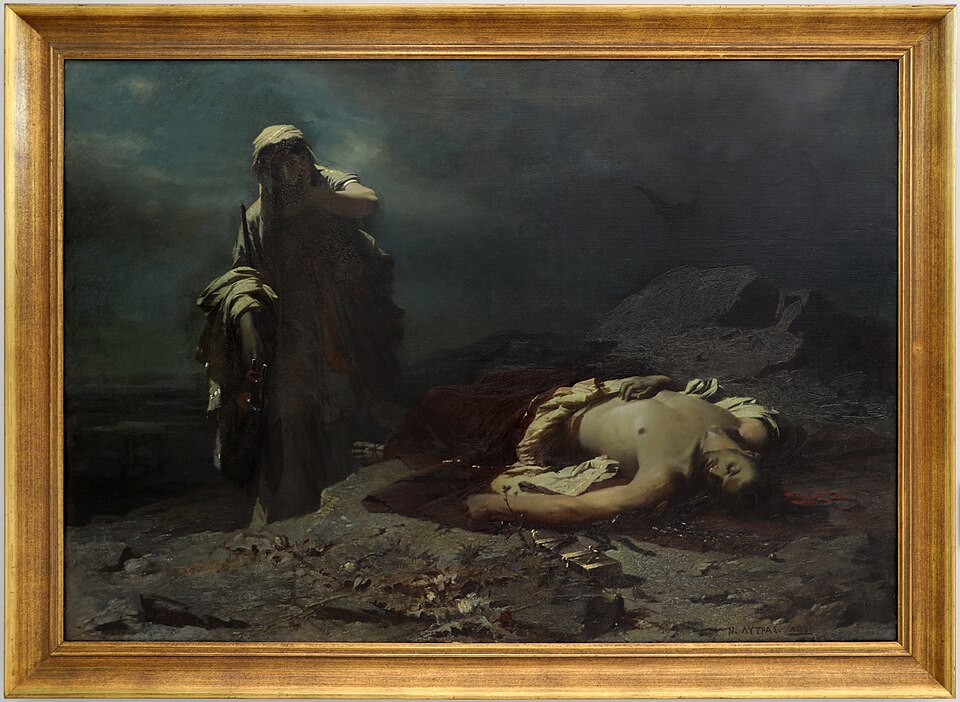 Antigone before the Body of Polynices (1865, Athens, National Gallery) Annexe: Antigone: the law of the city and the unwritten laws
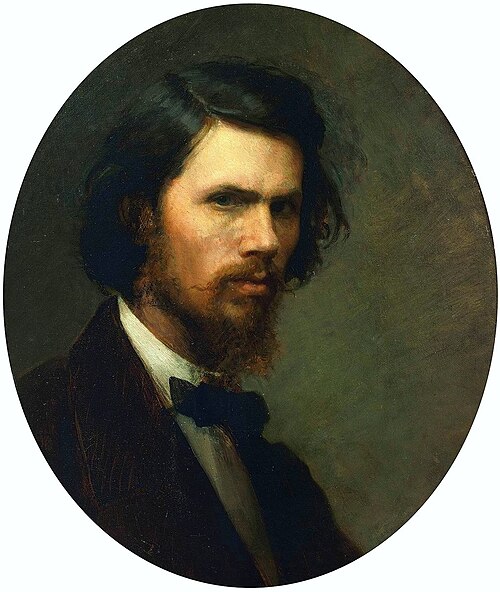 Ivan Kramskoi1837-1887
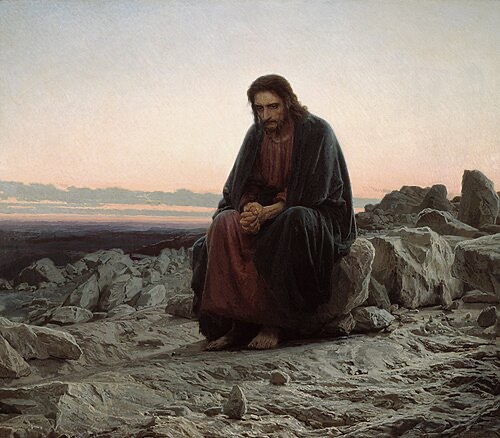 Ivan Kramskoy, Christ in the Desert (1872, Moscow, Tretyakov Gallery) Part Seven · See the part · Annexe: Matthew and Luke: the infancy, the Sermon on the Mount, the parables
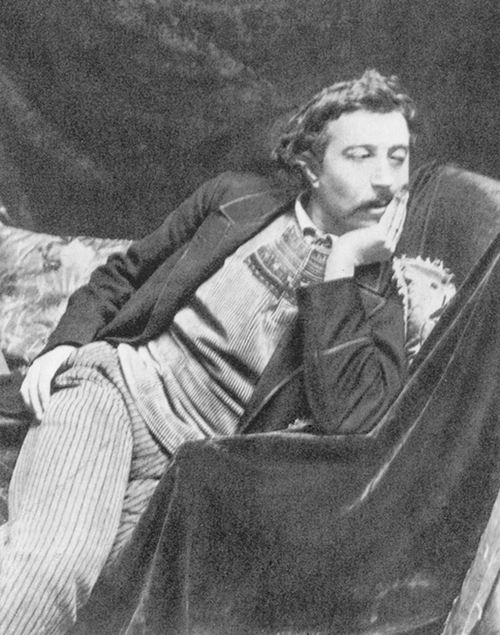 Paul Gauguin1848-1903
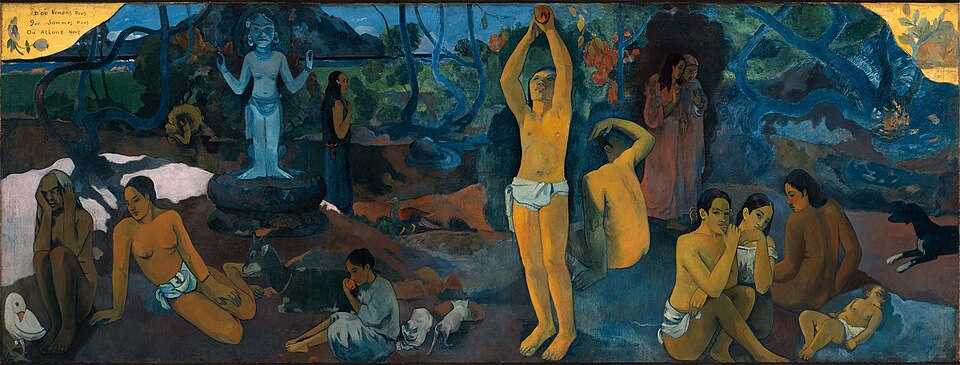 Where Do We Come From? What Are We? Where Are We Going? (1897-1898, Boston, Museum of Fine Arts): the three questions inscribed on the canvas are those that religion is expected to answer Part Nine · See the part
Anonymous works and monuments
Anonymous works and monuments
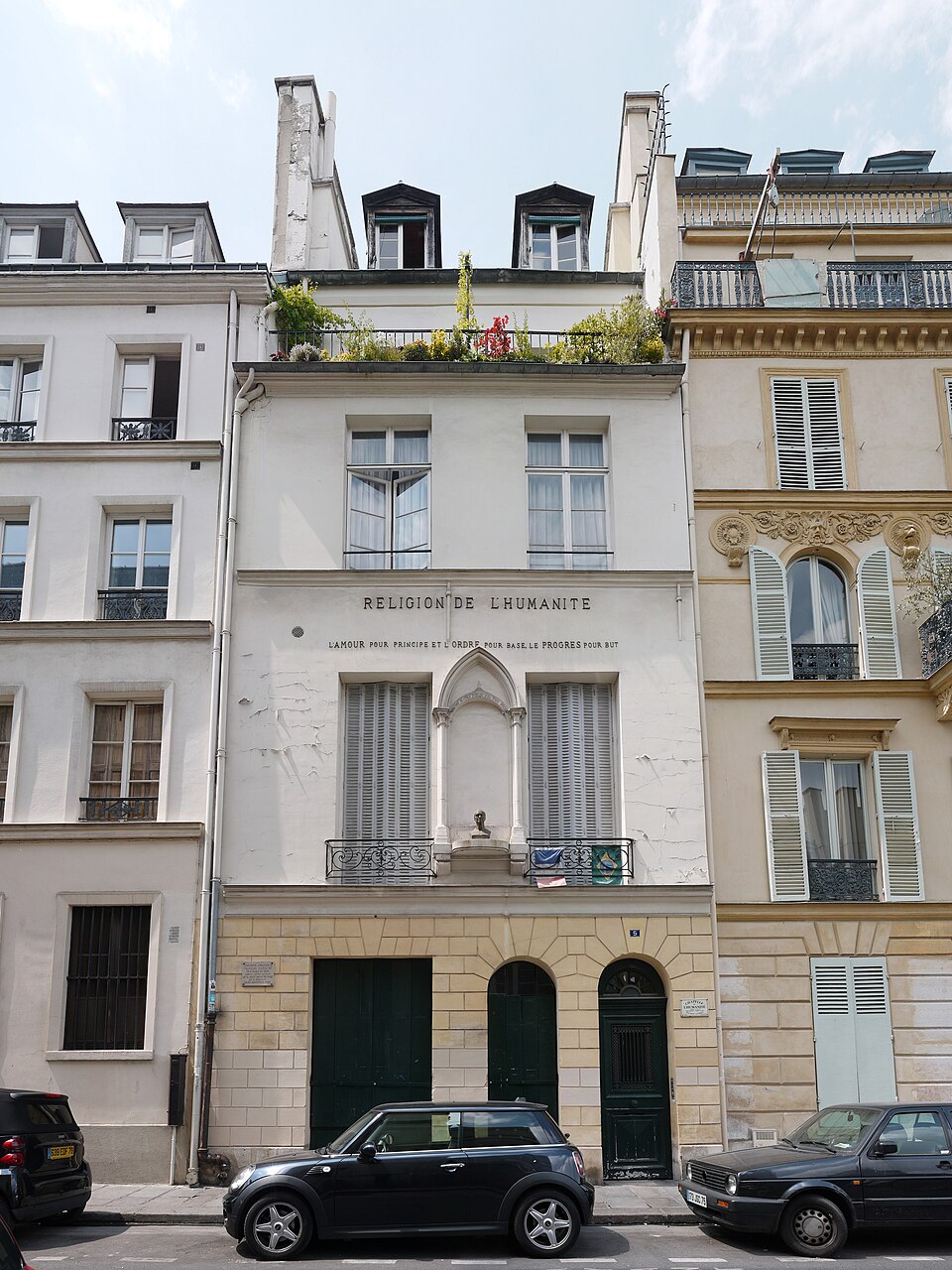 Façade of the Temple of Humanity, 5 rue Payenne, Paris: the positivist religion had its places of worship Auguste Comte · Read the section
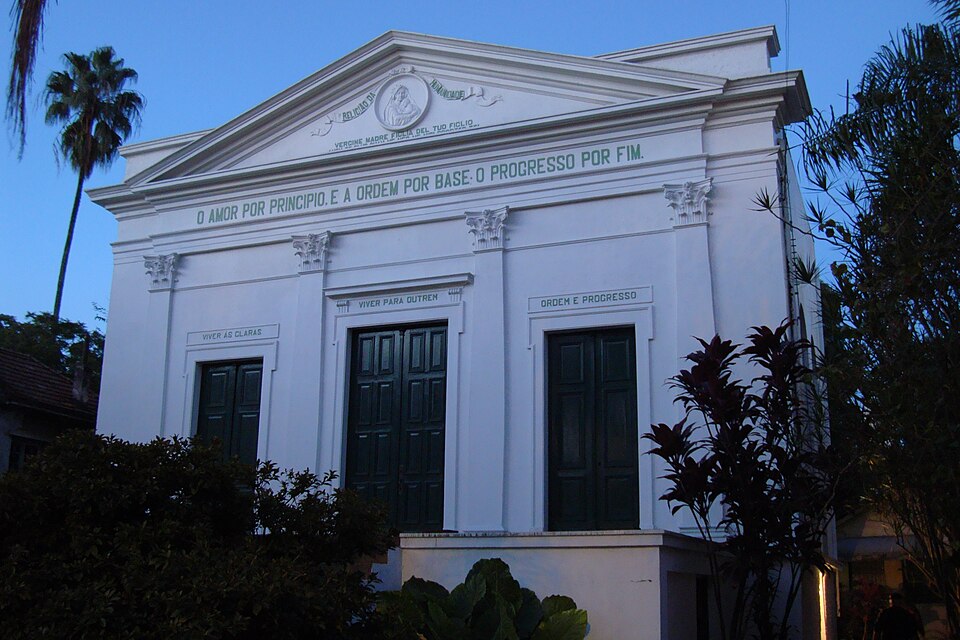 The Positivist Temple of Porto Alegre (Brazil): the cult of Humanity took root in Brazil, whose flag bears the Comtean motto Ordem e Progresso Auguste Comte · Read the section
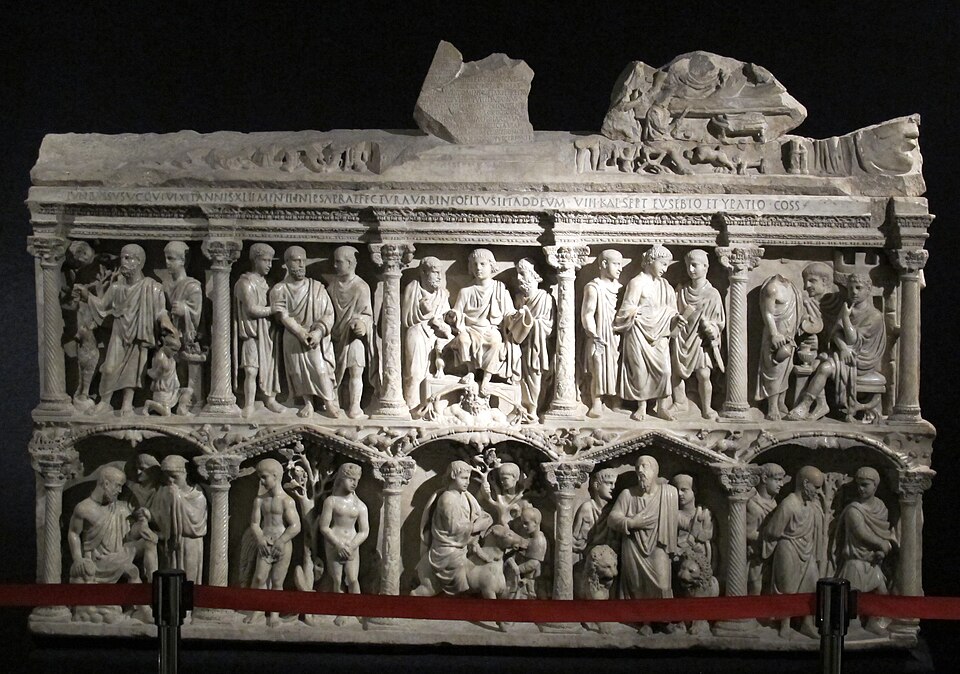 Sarcophagus of Junius Bassus (359 CE, Vatican City, Treasury of Saint Peter's): a prefect of Rome who died a neophyte, he was buried beneath the first great sculpted programme of scenes from the Old and New Testaments; in the centre of the upper register, Christ enthroned between Peter and Paul Part Two · See the part
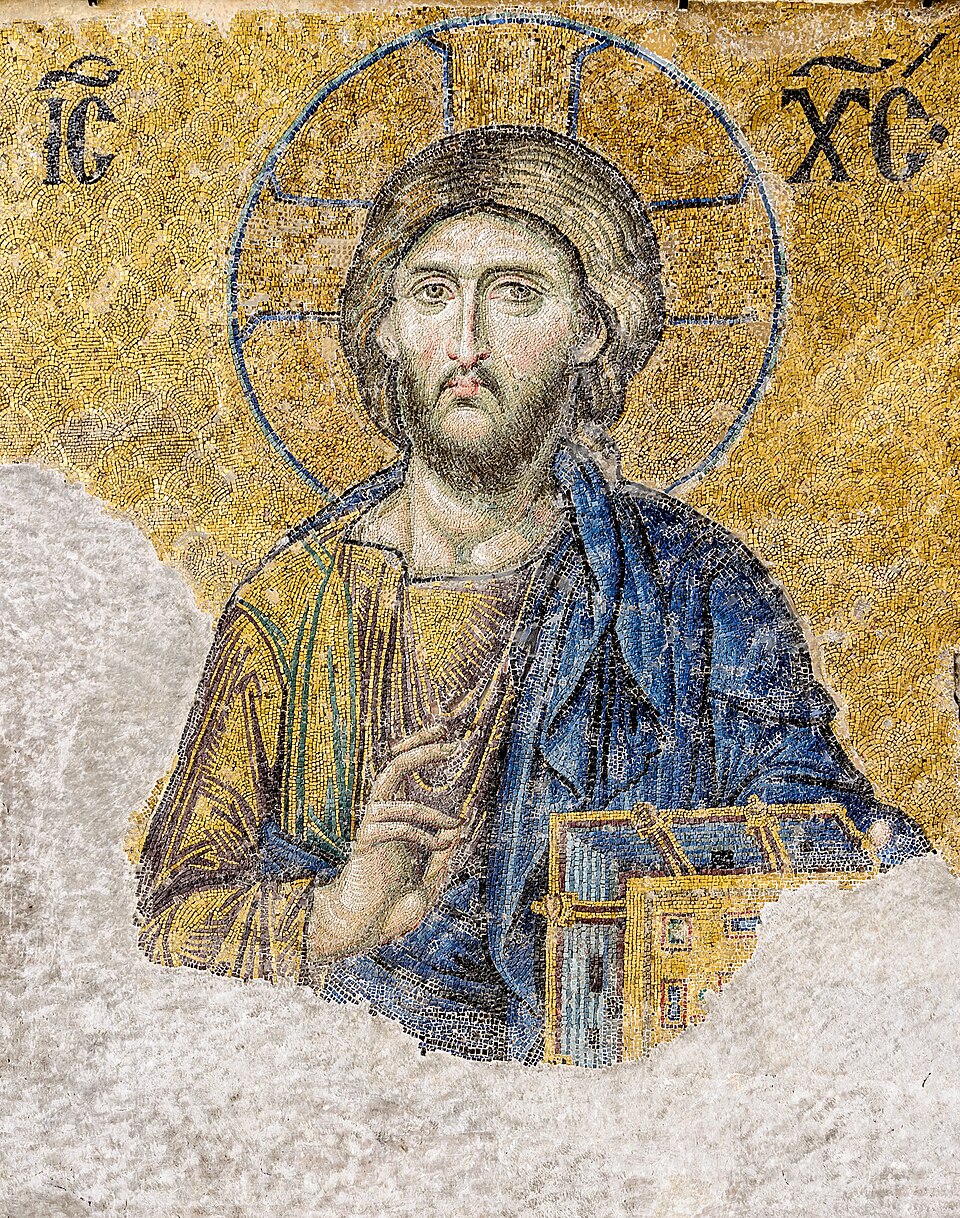 Christ Pantocrator from the Deesis mosaic (13th century, Istanbul, Hagia Sophia): the Christ-Logos of Byzantine theology, a distant heir of the doctrine of the mediating Logos that Philo worked out in Alexandria Philo of Alexandria · Read the section
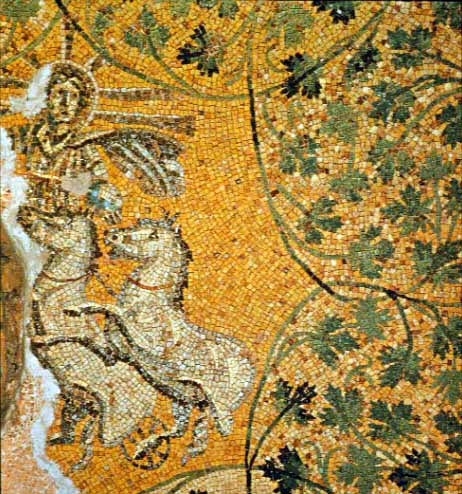 Vault mosaic of the Mausoleum of the Julii (Mausoleum M) in the necropolis beneath Saint Peter's in the Vatican (3rd century CE): the Sun on his chariot, interpreted as Christ-Helios, at the time when the apologists were claiming for Christ the language of the philosophers and of the pagan cults Justin Martyr · Read the section
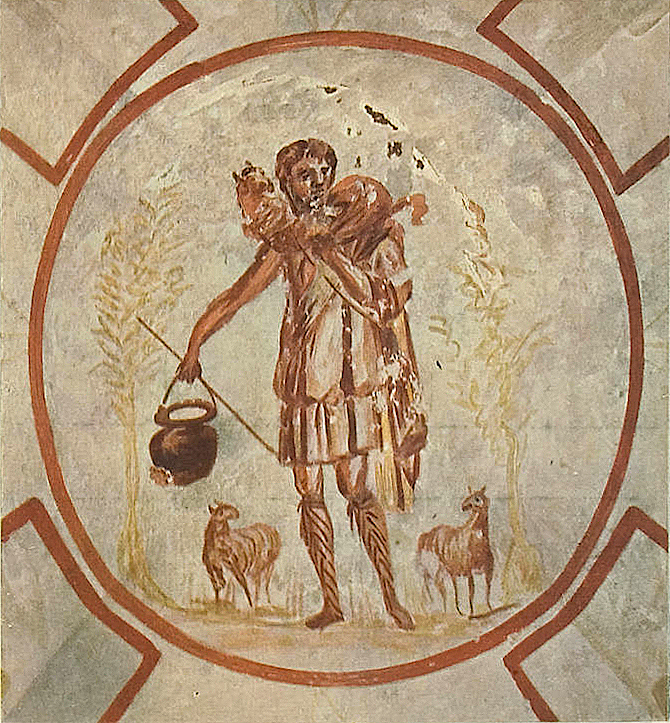 The Good Shepherd, painting in the Crypt of Lucina, Catacomb of Callixtus (Rome, 3rd century CE), plate from Joseph Wilpert, Die Malereien der Katakomben Roms (1903): the imagery of the Church that Celsus attacks and that Origen defends in Against Celsus (c. 248) Celsus and Origen: the first critique of Christianity, and its answer · Read the section · Annexe: The teaching of Jesus: the Kingdom, the parables, the miracles
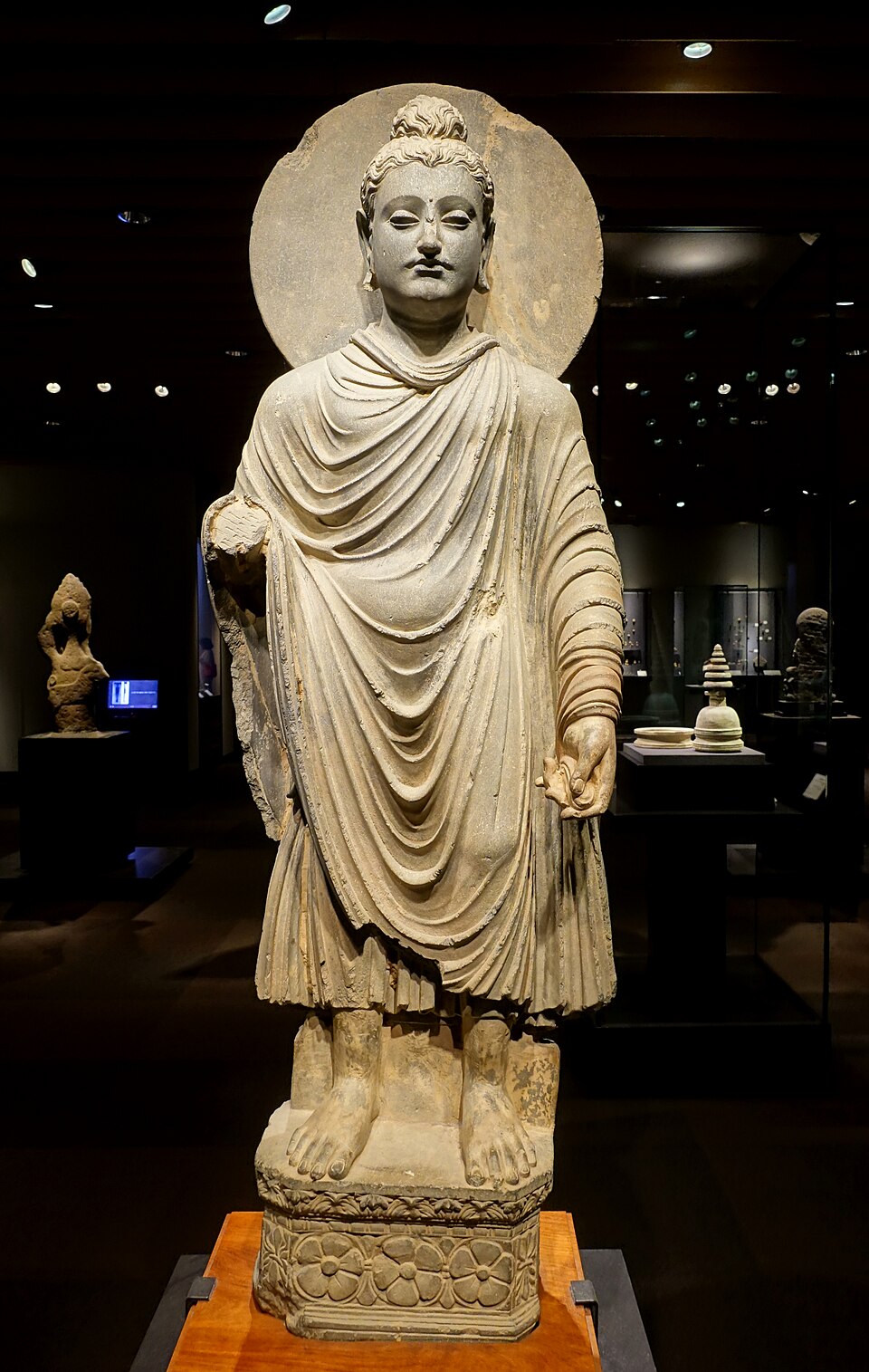 Standing Buddha, Gandhara art, Peshawar region (Pakistan), Kushan period, 2nd-3rd century CE, schist (Tokyo National Museum): the Buddha draped like a Hellenistic orator, an early encounter between India and Greece long before European philosophers discovered Buddhism The Buddhism of the philosophers: a spirituality without God? · Read the section
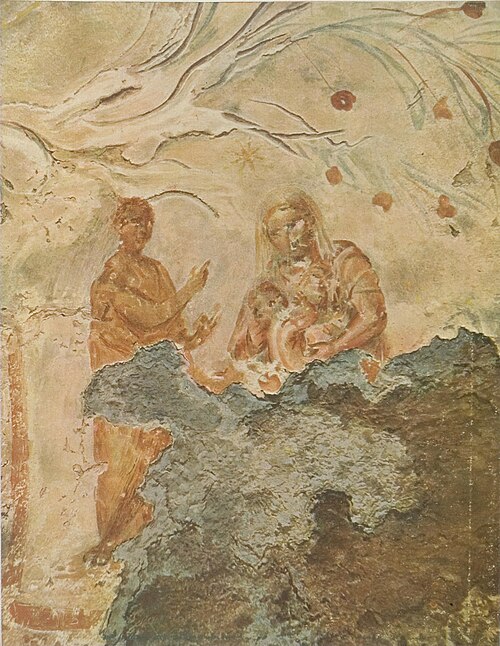 The Virgin and Child and a prophet pointing to a star, Catacomb of Priscilla (Rome, 3rd century CE), plate from Joseph Wilpert, Die Malereien der Katakomben Roms (1903) Part Two · See the part · Annexe: The prophets of Israel, the exile and the book of Daniel
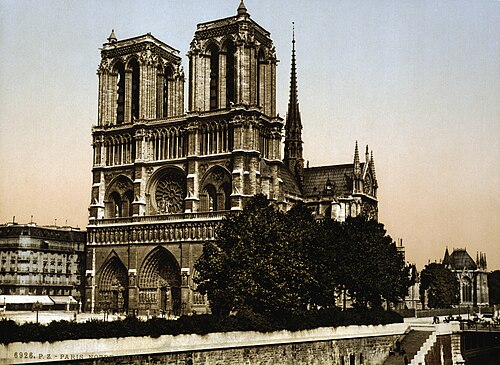 Notre-Dame de Paris, c. 1890-1900 (Library of Congress) Part Eleven · See the part
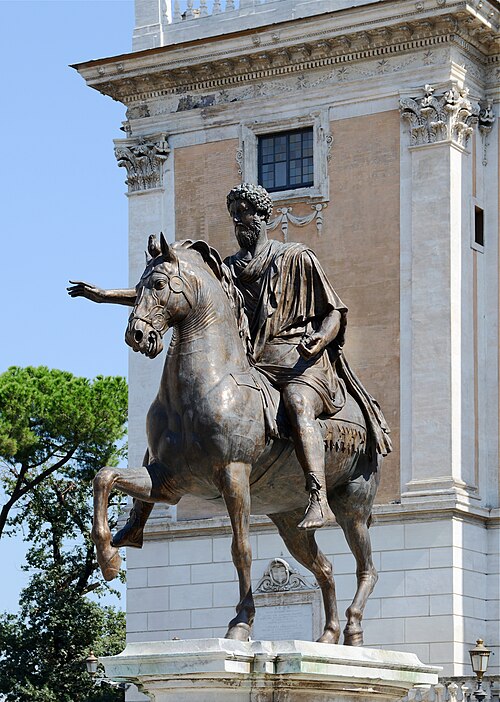 Equestrian statue of Marcus Aurelius on the Piazza del Campidoglio in Rome (replica; the bronze original is in the Capitoline Museums) Part Twelve · See the part
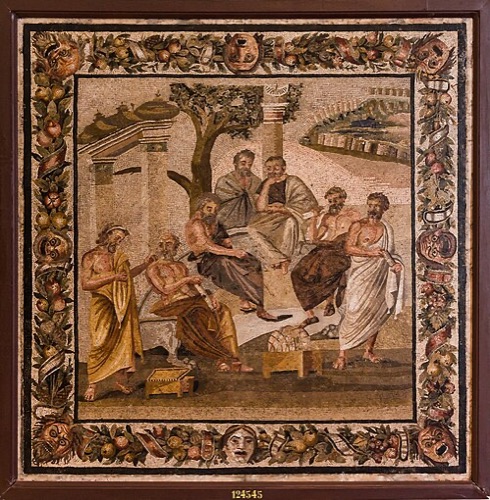 Plato's Academy, mosaic from the villa of T. Siminius Stephanus in Pompeii (1st century BCE, Naples, Museo Archeologico Nazionale) Part One · See the part
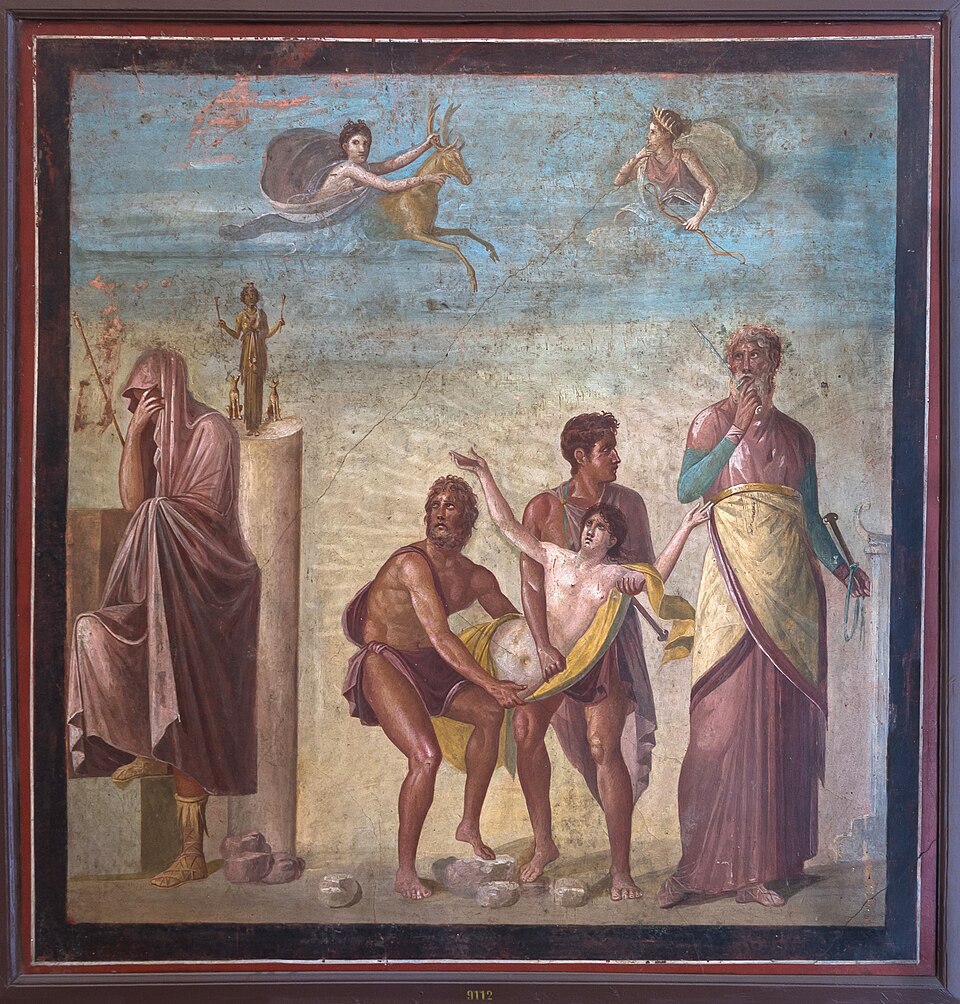 The Sacrifice of Iphigenia, fresco from the House of the Tragic Poet in Pompeii (1st century CE, Naples, Museo Archeologico Nazionale): Agamemnon turns his head away, Artemis sends the hind that will take the girl's place Annexe: The Trojan War: Iphigenia at Aulis, the wrath of Achilles, Priam
No work matches.